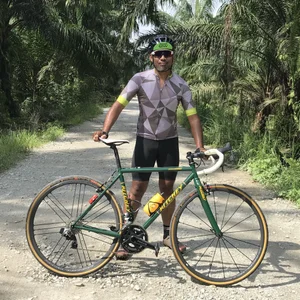
Cycling Noto, Japan: Part 1
The Noto Peninsula (能登半島, Noto Hantō) juts out into the Sea of Japan from the northern half of Ishikawa Prefecture and a secluded part of Japan, retaining much of its rustic old world charm. The peninsula is home to remarkable coastal scenery with small fishing and farming towns, as well as beautiful national parks.
For Maya, Nadiah and myself, this trip in 2016 was our very first cycle touring journey together and the experience definitely left us pining for more! Looking back, I can no longer imagine myself traveling without a bike – it just adds such a wonderful dimension that you would otherwise miss out on if traveling in a bigger vehicle.
Why Noto?
What better way to begin touring than in a completely different country, culture and landscape! And to top it all off, neither Nadiah or I had any touring experience, while Maya had only toured in a fully supported group of road cyclists. But we didn’t want the regular route that everyone else did, or be stuck on the tourist trail or the big cities. We wanted to see Japan away from the tourist traps and see the history and heritage of old Japan. We wanted to experience the culture and taste the traditional cuisine, and see the landscapes in the remote corners that only a bicycle could reach. Noto was our first self-planned and self-supported tour, and we absolutely loved it.
Enjoying the golden hour along the beautiful bike path while going through Hakui.
Although the Noto peninsula is in a more isolated part of Japan, we never felt that we were in any real danger of getting lost or not being able to find food and shelter. Perhaps it was naïveté, perhaps it was luck, but didn’t have any truly alarming moments even when all our lights were running out of power at dark in the middle of the mountains or when Maya’s tyre valve broke in a small town. Ten years later, we still believe Japan is the best place to start cycle touring, although we do now approach our tour with a bit more caution and a healthy amount of pre planning as our chosen routes become increasingly remote.
Back then though, the Noto Peninsula was the perfect place to begin our cycling adventure because of its beautiful natural landscape, moderately challenging terrain, and quaint seaside towns with wonderful hospitality. If you’re ever looking for a good introduction to cycle touring in Japan, the Noto route isn’t too strenuous and gives you a nice bit of everything.
Flying to Japan with a bike
The first challenge was to figure out how to transport the Birdy itself. I have tried looking for a suitcase that could fit the Birdy, but all options would have required me to do quite a bit of disassembly. This would essentially defeat the purpose of having a folding bike. After extensive research, I chose to go with a padded bag for the following reasons:
The Birdy’s most sensitive components such as the rear derailleur and chain are already protected by virtue of the Birdy's fold itself. I only had to remove the rear rack and saddle.
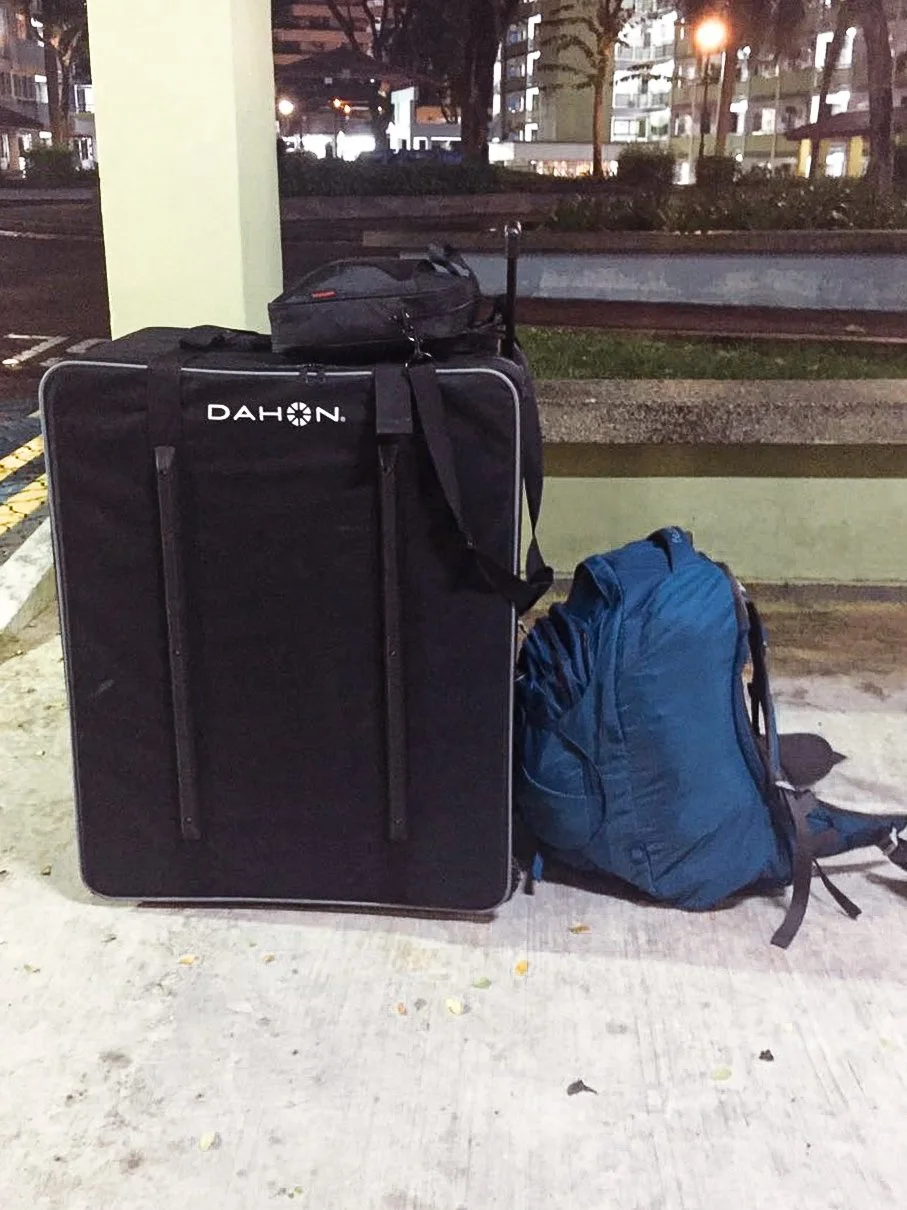
I used the Dahon carry bag, while another great option in a similar size is the Tern Stow Bag. I added an external luggage strap to keep things together, leaving the overall weight around 17kg, which was safely under my flight’s 30kg weight limit.
I could check this in with my airlines as sports equipment i.e. oversized luggage. Since the overall package isn't that heavy or oversized, it was easier for baggage handlers to treat it well (which they did).
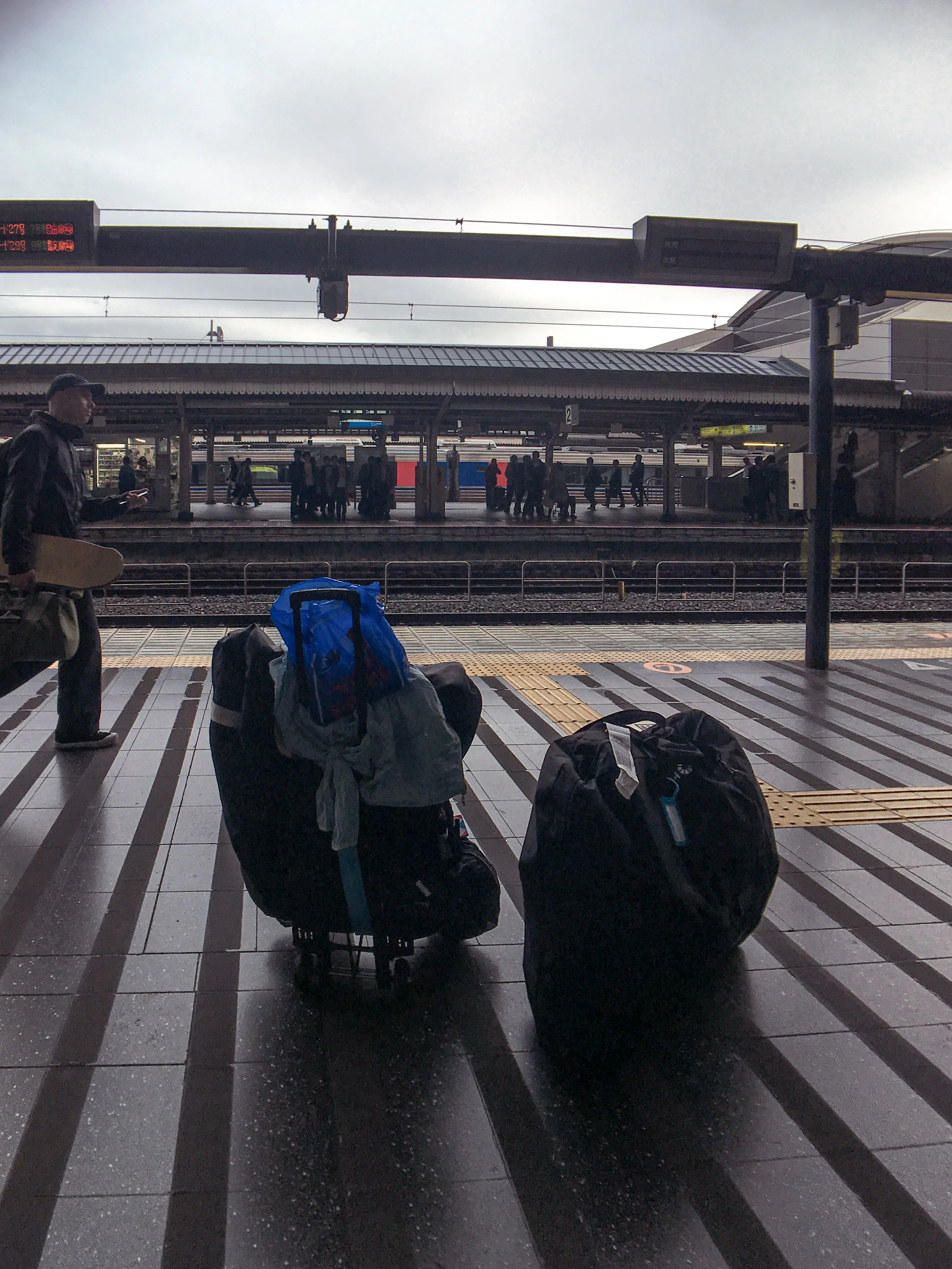
The padded bag doubled as a cover for the bike when we needed to take the train, in line with Japan railway rules.
What to bring for a Noto tour
Before we started our cycling tour into the Noto Peninsula, we made a few decisions about how we wanted to travel while we were cycling. As we were using folding bikes and it was our first time touring in Japan, we wanted to keep things as simple as possible.
Each of us kept our luggage under 10kg, carrying enough essentials for three days, consisting mainly of clothing, some snacks, cameras, cables, chargers and other small things. We would do laundry along the way as needed. I had a pair of the Ortlieb Sport-Roller Classic panniers which fit everything I needed just nicely.
Nadiah and Maya wanted the more budget friendly option, and both chose to go with a small backpack and dry bags strapped to their rear racks with bungee cords. They also carried pretty much the same amount of gear.
We packed mostly synthetic and semi-synthetic clothing that was lightweight and easy to dry. I was more or less a Uniqlo advert with rain resistant Uniqlo pants (with Airism undies which are so nice for cycling), heat tech base layer, lightweight fleece and down jacket. Plus it's Japan, so Uniqlo :P
Getting to Kanazawa is fairly straightforward from Tokyo. Upon landing at Narita International Airport, you can take a connecting flight to Komatsu airport, or taking the Shinkansen directly from Tokyo station all the way to Kanazawa station. Mobile data plans are available at the airport like in most countries, but I highly recommend purchasing a data plan or e-SIM ahead of time as it is cheaper. I went with Yokoso SIM and had no complaints throughout my travel period.
When traveling on the Shinkansen or any train in Japan, please ensure that your bike is completely covered in a bag. If you need to have a wheel or two stick out for easier rolling mobility, make sure that it's hidden towards the bottom so it's not obvious. Get a seat that's closest to the front or rear of the carriage where there is space to stash a folding bike, be first in line at the platform, and always have bungee cords or voile/velcro straps to secure it in place.
We used Hyperdia to navigate the train system back then, but Google is now more widely used. Technology has advanced a fair bit and it is essential for ease of public transport use in Japan.
Luggage forwarding

The luggage forwarding and delivery services in Japan are truly amazing and deserve special mention. The most famous of these companies is Yamato, fondly recognisable by their logo of a mommy cat carrying her kitten. Their service is called TA-Q-BIN and is very well known across all of Japan. When traveling, there is often very limited space in trains (or in panniers for that matter), so it is always best to forward your luggage to the next destination if you happen to be carrying a lot of stuff. It's also a great way to make sure that you can continue to collect souvenirs along the way while traveling.
Yamato runs in partnership with Family Mart, so their services are accessible at most Family Mart locations. But for oversized luggage, you will need to go to any of the Yamato branches. Another good option is Sagawa, which we have used several times since then. JAL also has their own luggage forwarding company, mostly based at major airports right next to the Yamato counter.
From Kanazawa station, we packed up everything we did not need into one big suitcase (Maya’s massive Dahon travel case) and forwarded it to our hotel in Wajima, our midpoint destination. When we arrived in Wajima soaking wet after a whole day of riding in the rain, our suitcase was waiting for us and we took the opportunity to reconfigure our belongings and change to clean clothes while doing our laundry. We then forwarded our shared suitcase to Takoaka, where we repeated the process one last time before heading to Tokyo. Most hotels already have all the delivery forms handy at the front desk, and will gladly arrange the entire process for you.
Note: Yamato charge per piece of luggage, so use a single suitcase for everything to make the delivery easier and cheaper.
OUR NOTO CYCLING ITINERARY
Stage 1: Kanazawa to Togijitomachi - 44km
Stage 2: Togijitomachi to Wajima - 56km
Stage 3: Wajima to Noto-cho - 30km
Stage 4: Noto-cho to Wakura Onsen - 60km
Stage 5: Wakura Onsen to Takaoka - 65km
Train to Takayama
Rest day in Takayama and trip to Shirakawa
Train to Tokyo
In retrospect, our very first cycling tour was an extremely brief seven days with only a day of rest at the end, but it proved to be one of the best traveling experiences. We’d immensely enjoyed the previous year’s five day walking tour of the Nakasendo road, the old road that connected Tokyo to Kyoto during the Edo Period. The walking tour allowed us to see a different historical post town every night, but we realised we were very much limited to how far and how fast our legs could carry us. Missing our train in the end and the subsequent expensive taxi ride later also made us realise that we didn’t want to be bound by public transport either. And so began the idea to embark on a bicycle tour instead. We earmarked a route that would start in the beautiful historic city of Kanazawa, cycling along the Noto Peninsula coastline until we reached Takaoka. From there, we would take the train to the alpine town of Takayama. We carried approximately 10kg of luggage each, spending the night at a mixture of hotels and small inns along the way.
The tour wouldn’t be too highly strenuous with extremely manageable distances, which were fairly small wheel foldie friendly. While some gradients got a little bit steep in certain areas, the uphill climbs were not too long if you end up having to dismount and push - which we did. If you are a newbie cyclist, I highly recommend finding a day in between to have a rest off the bike, when you can give your legs some active recovery. A day of exploring and walking around town do help tremendously in rejuvenating tired touring legs (in addition to onsen time of course!) provided you don’t overdo yourself.
2026 UPDATE: I’ve omitted the elevation stats for this article as we have found that strava elevation has been inaccurate, particularly back when we did this tour.
Our trip stretched from the last days of October into the first week of November in 2016. The daily temperatures averaged around 10 degrees Celsius or 50 degrees Fahrenheit, with a fifty percent chance of showers. There also weren't many daylight hours with the sun setting at around 5pm (something to take note of when planning a similar trip). With that said, we packed our base layers and rain layers and were more or less prepared.
The total traveling distance between Kanazawa and Takaoka was approximately 330km for the route that we planned. We booked our lodging ahead of time so we knew exactly where we would finish for each day of travel.
But before heading to Kanazawa - the starting point of our tour - we had to spend a bit of time in Kyoto. I was flying in from the US after a quick work trip, where I would meet Nadiah who would take a direct flight there from Kuala Lumpur. Maya would give the Kyoto segment a miss since she was working for a Japanese company at the time and had been there a few times already.
Kyoto: Before the over tourism
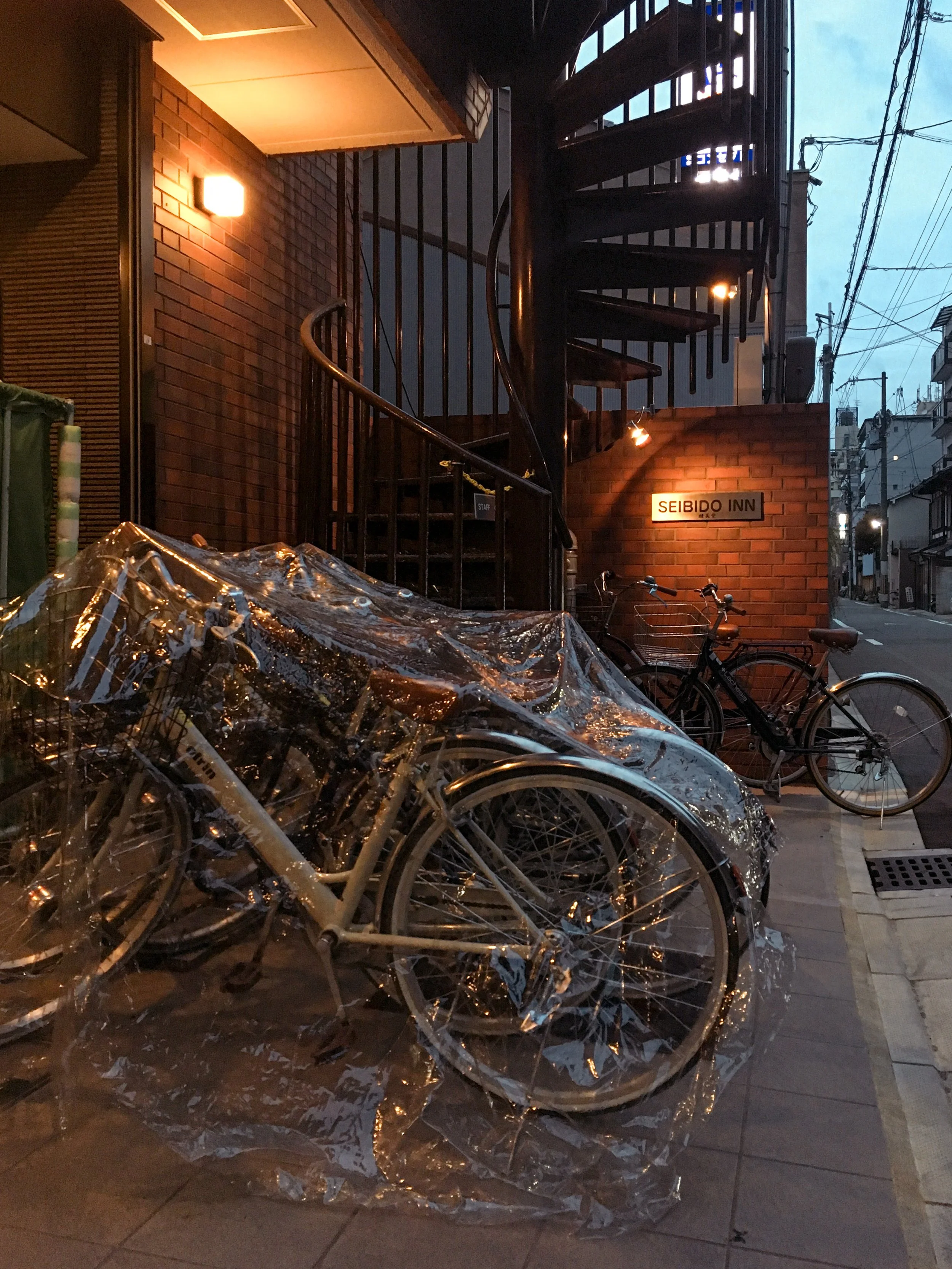
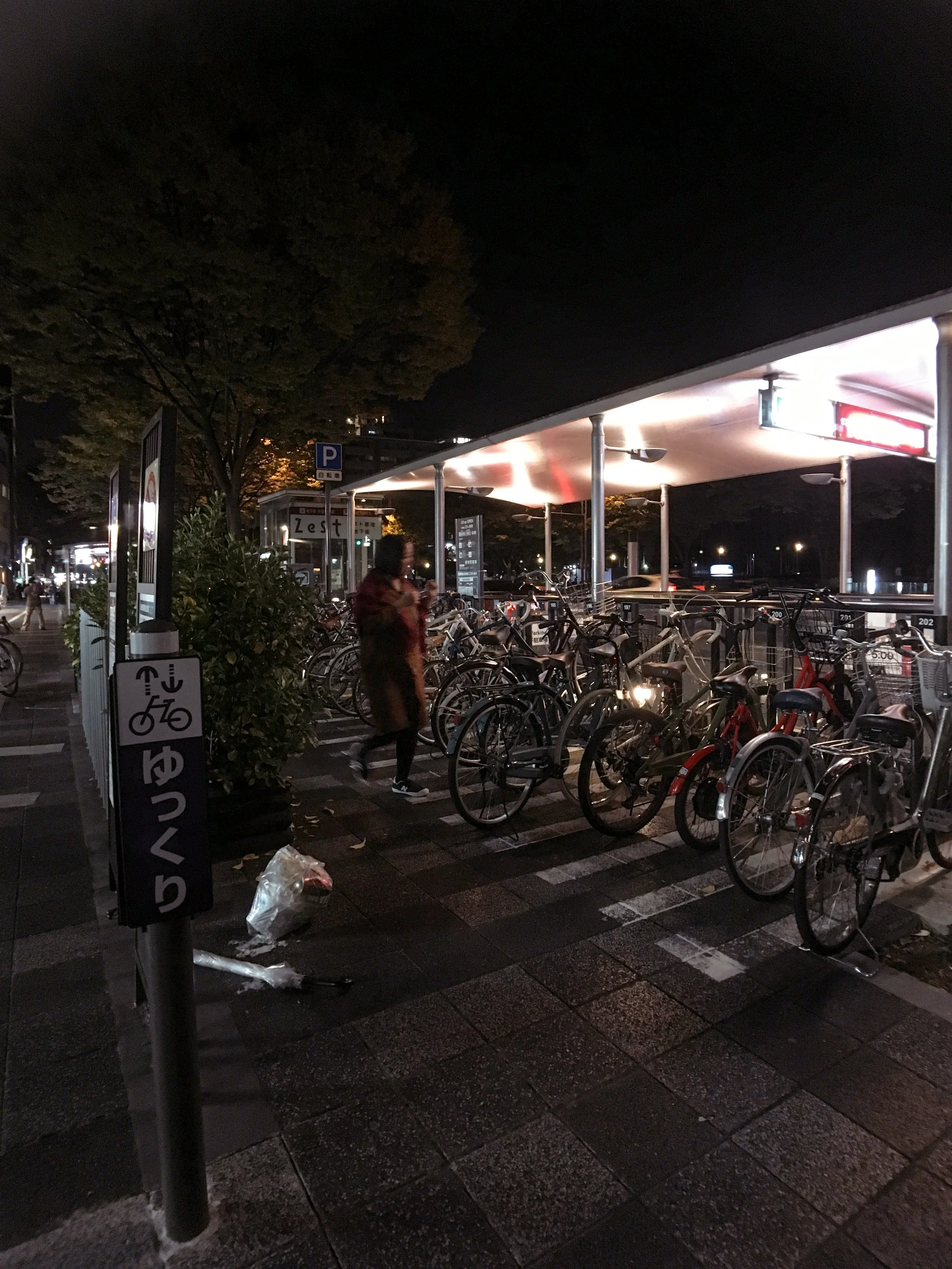
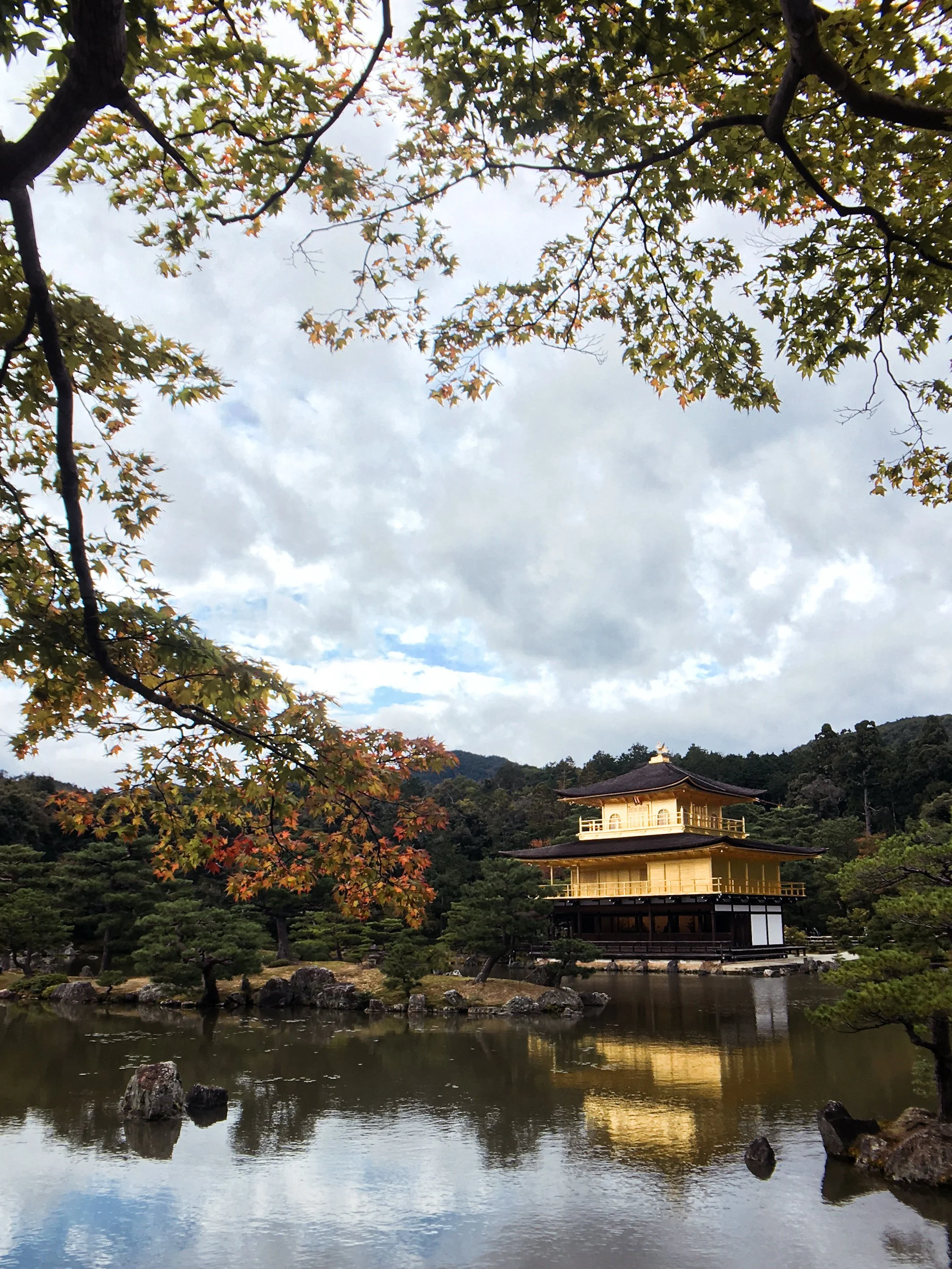
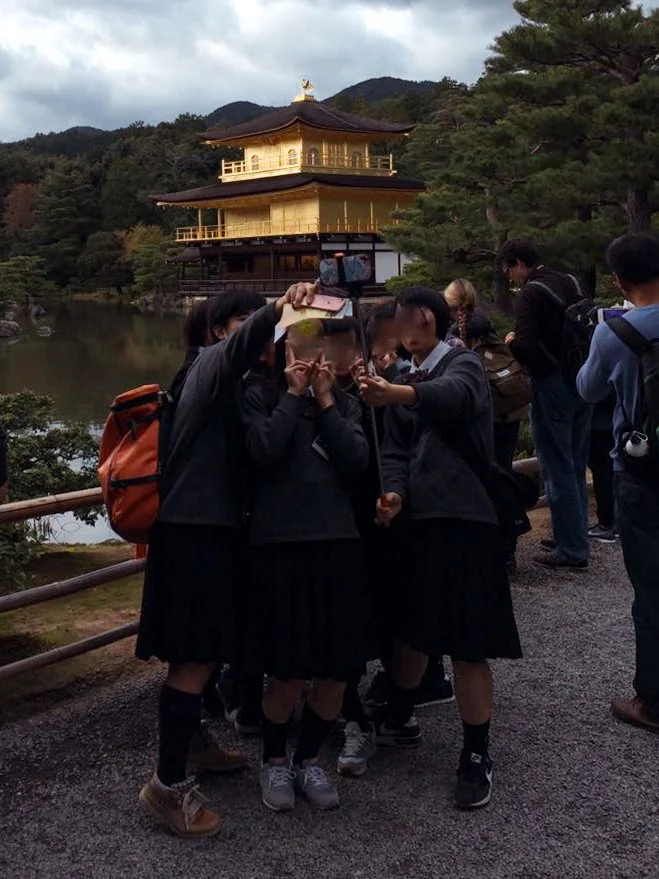
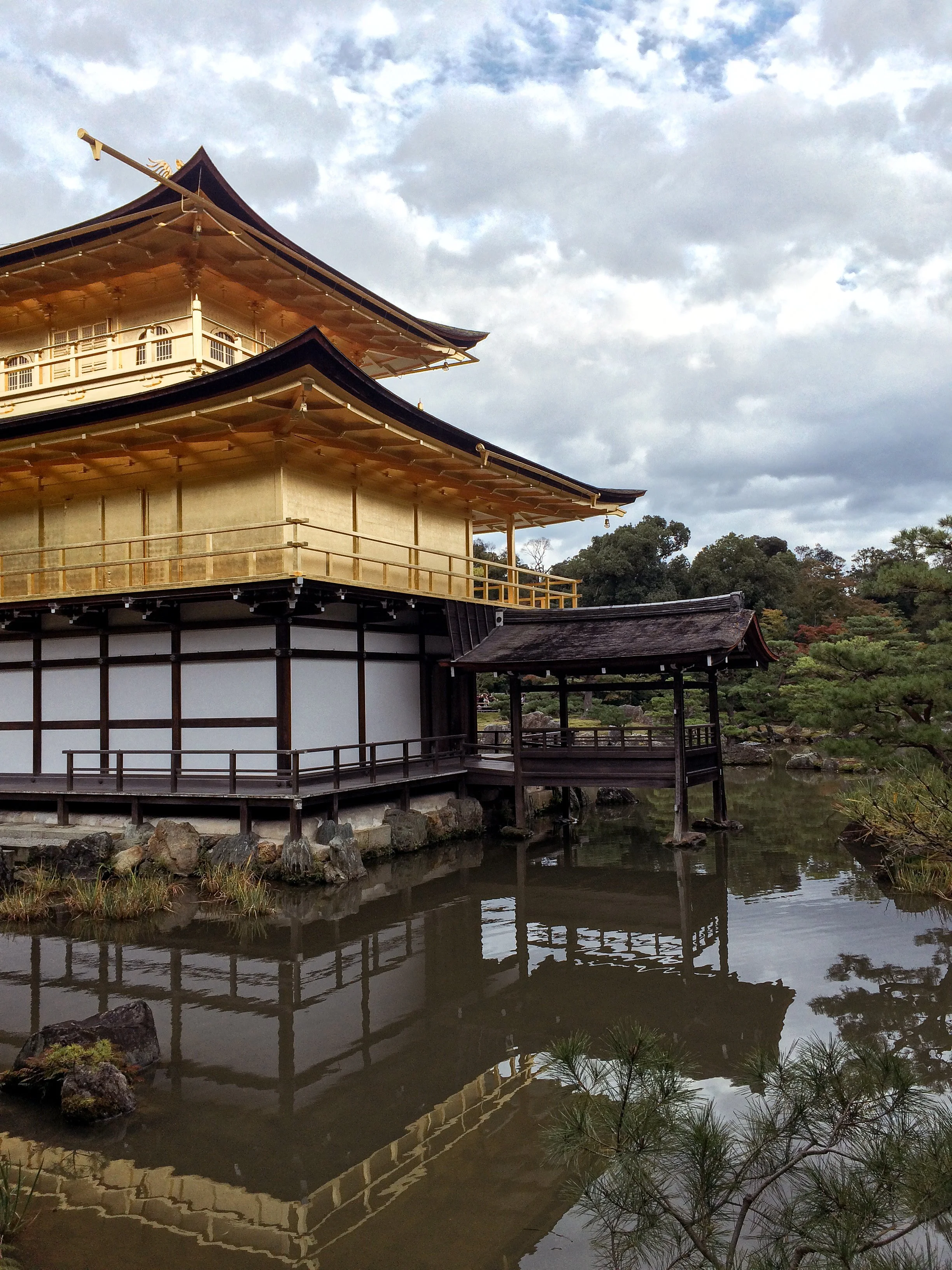
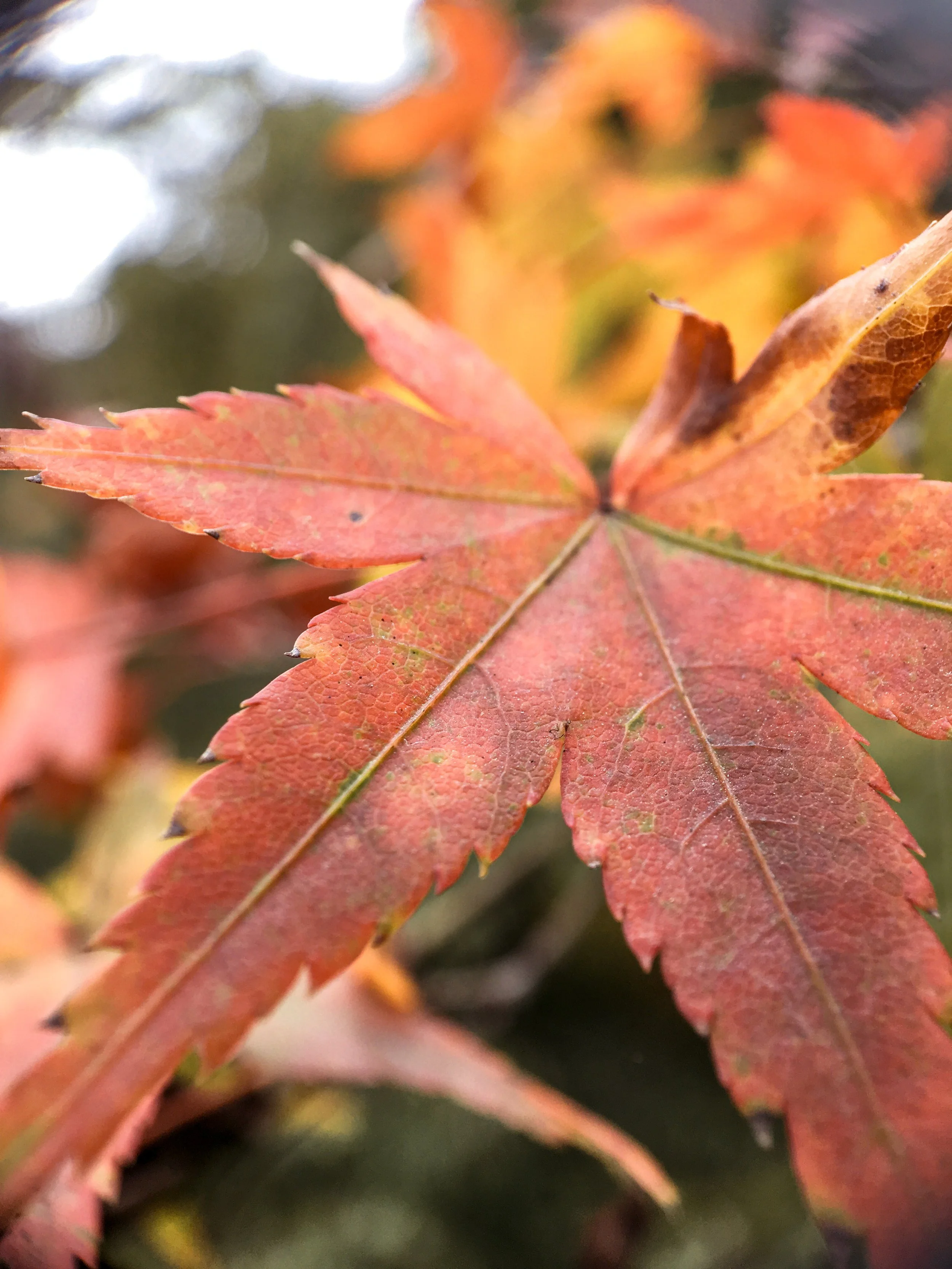
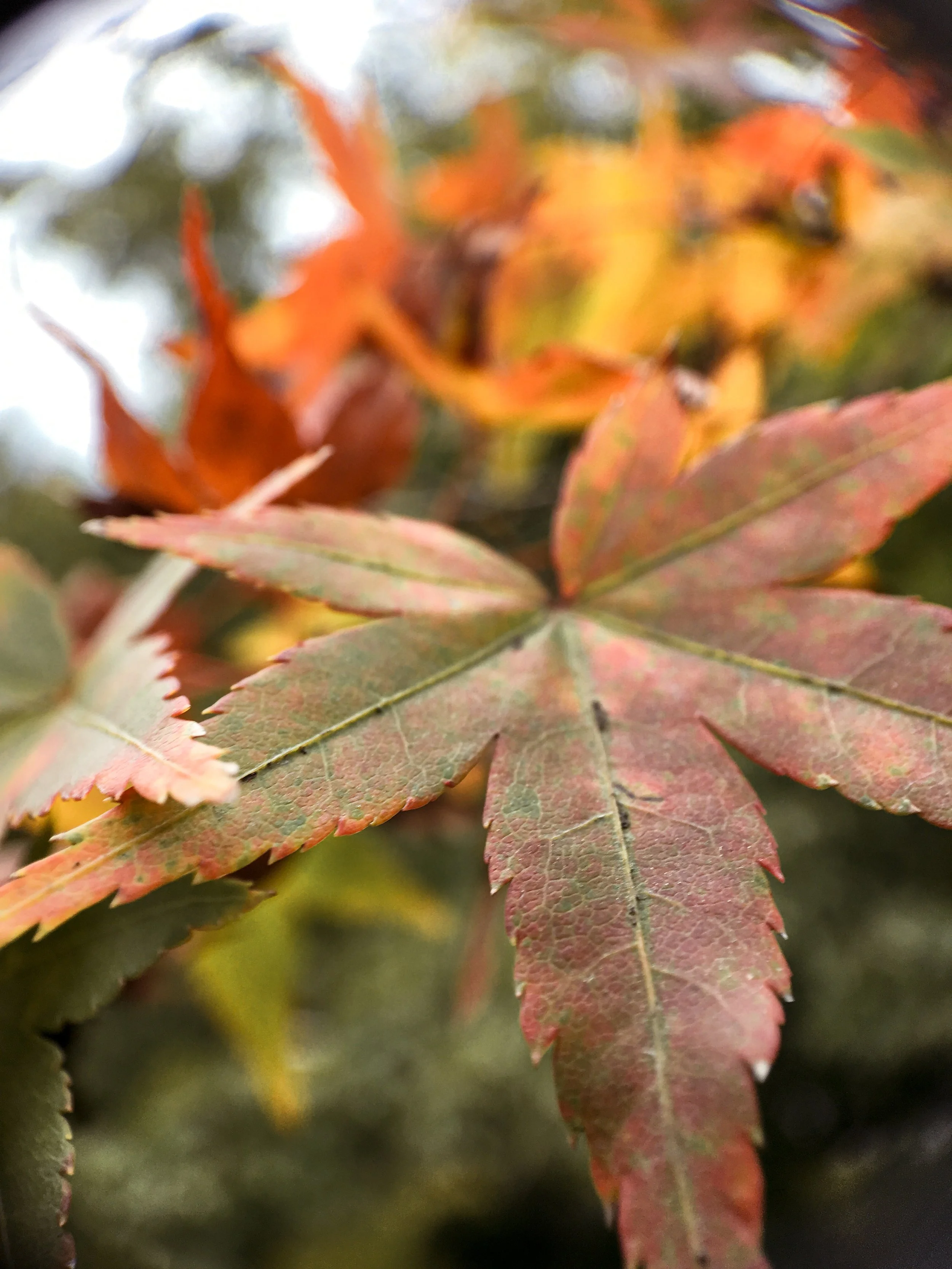
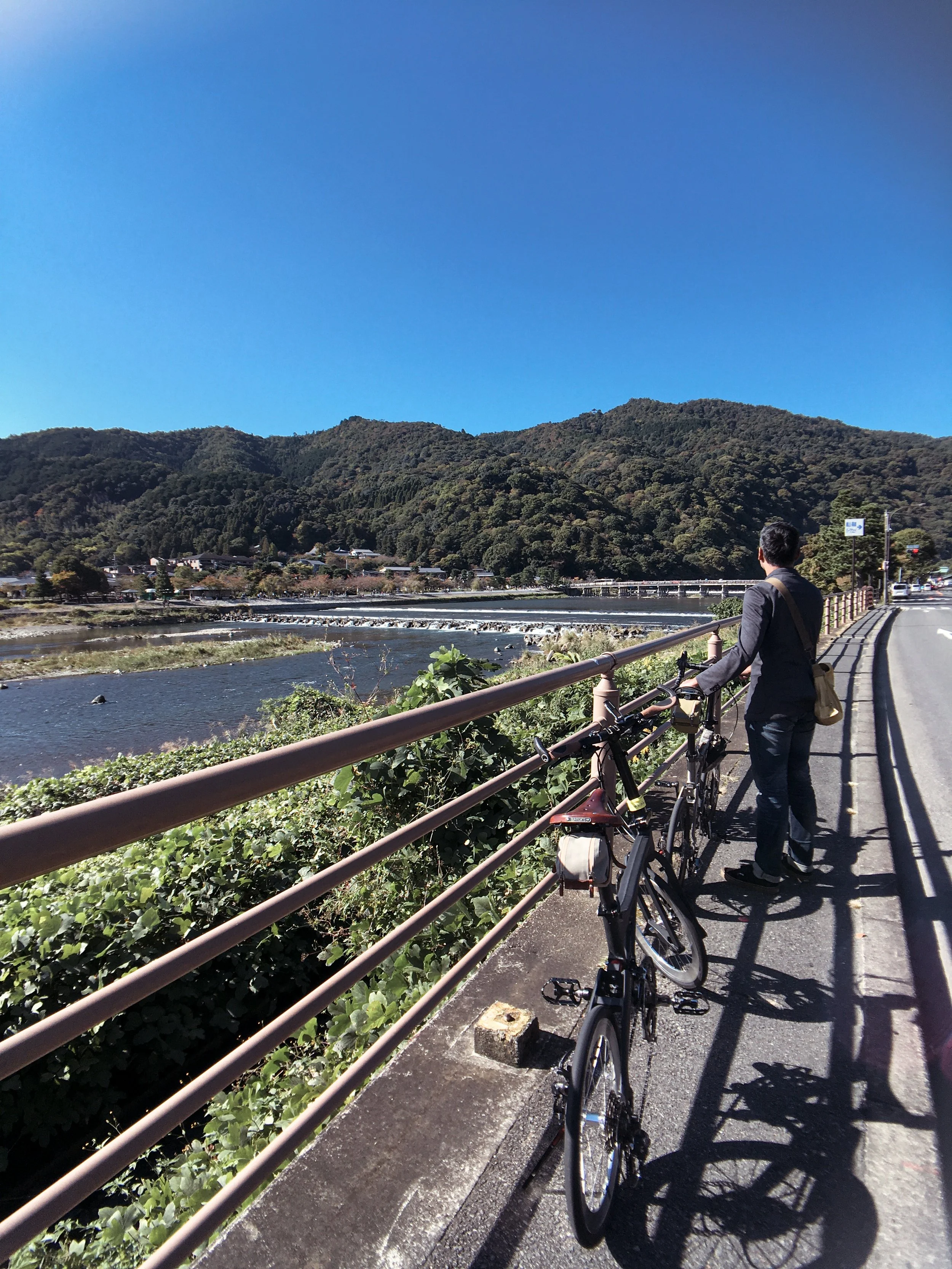
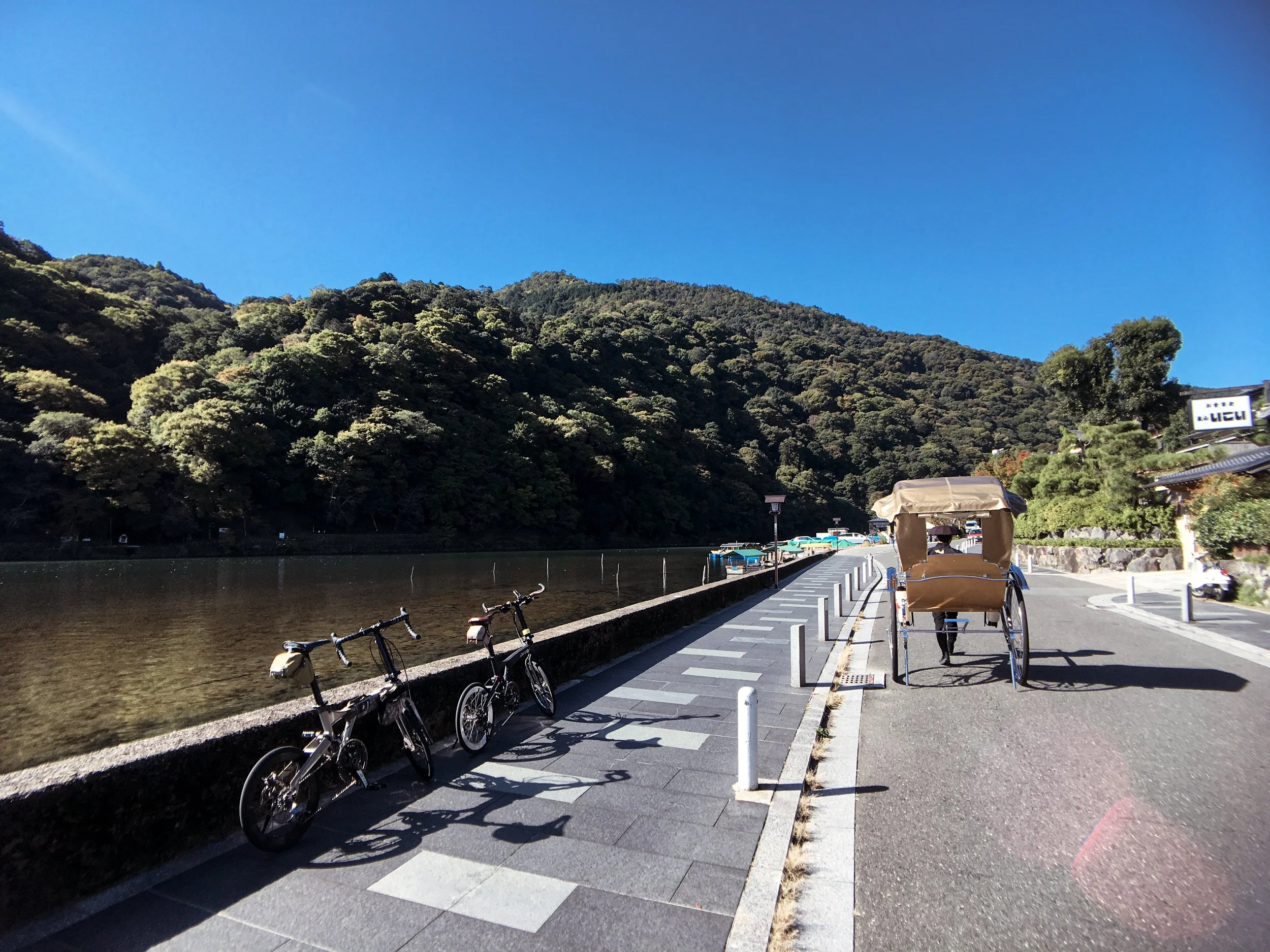
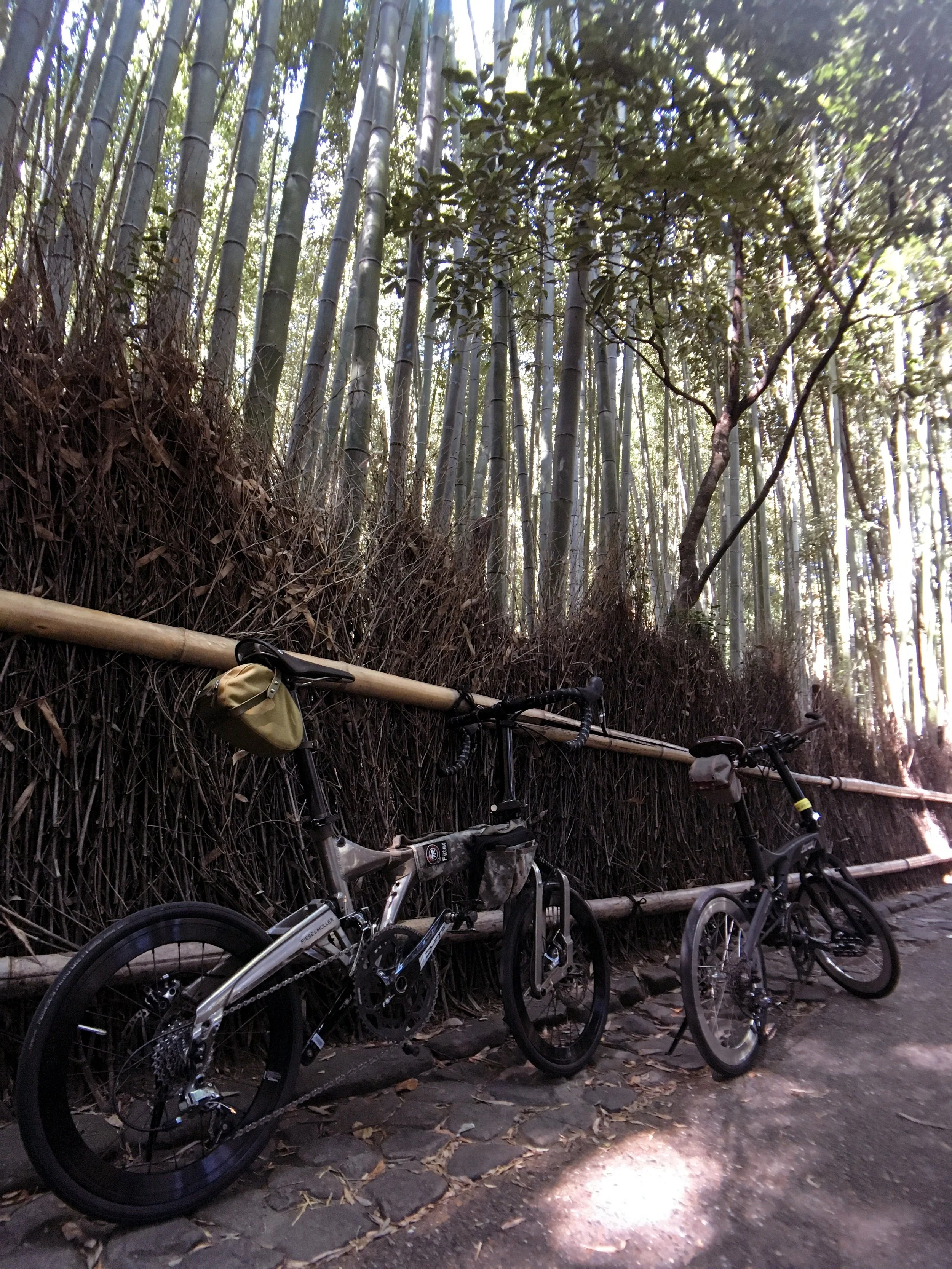
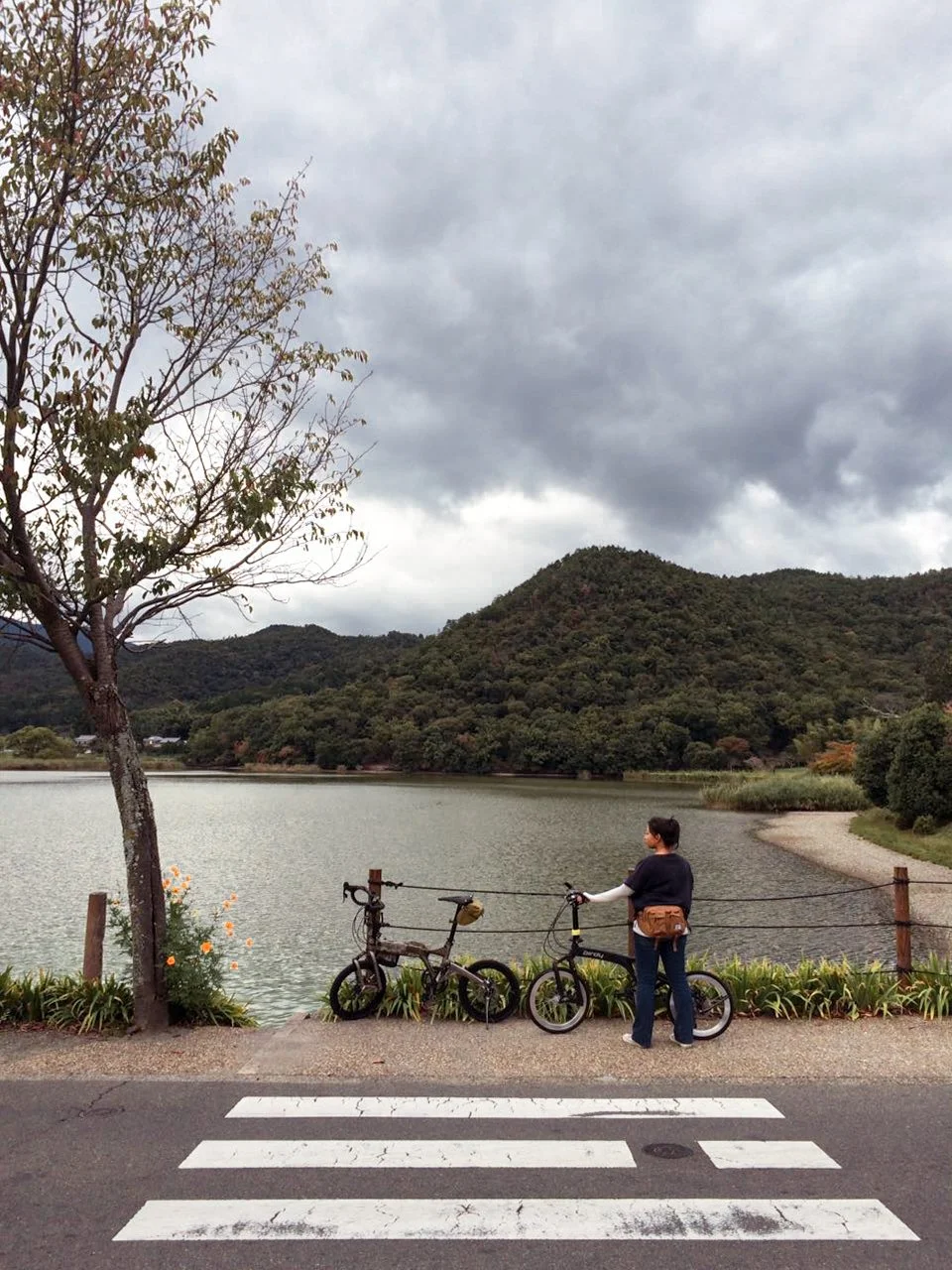
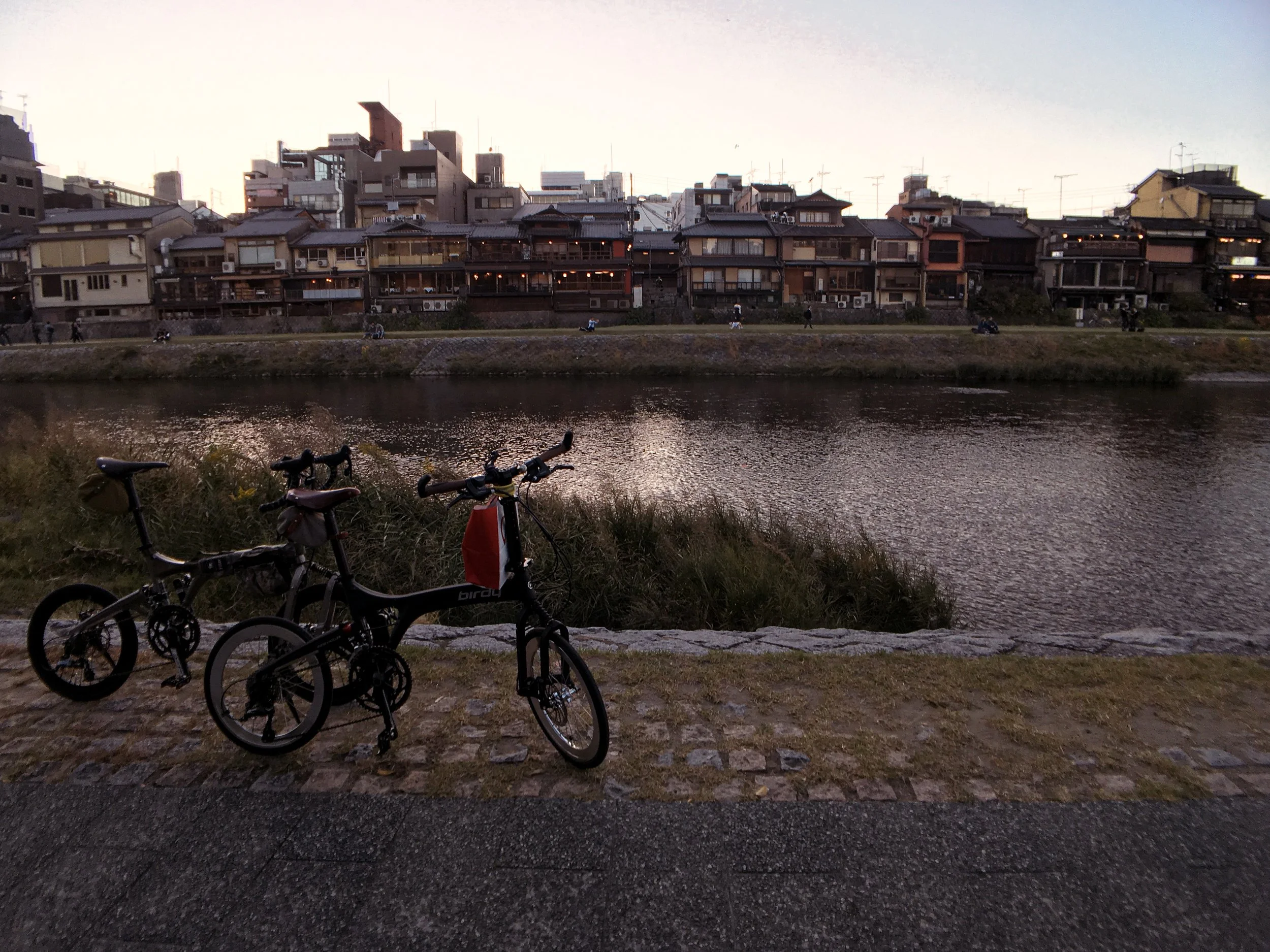
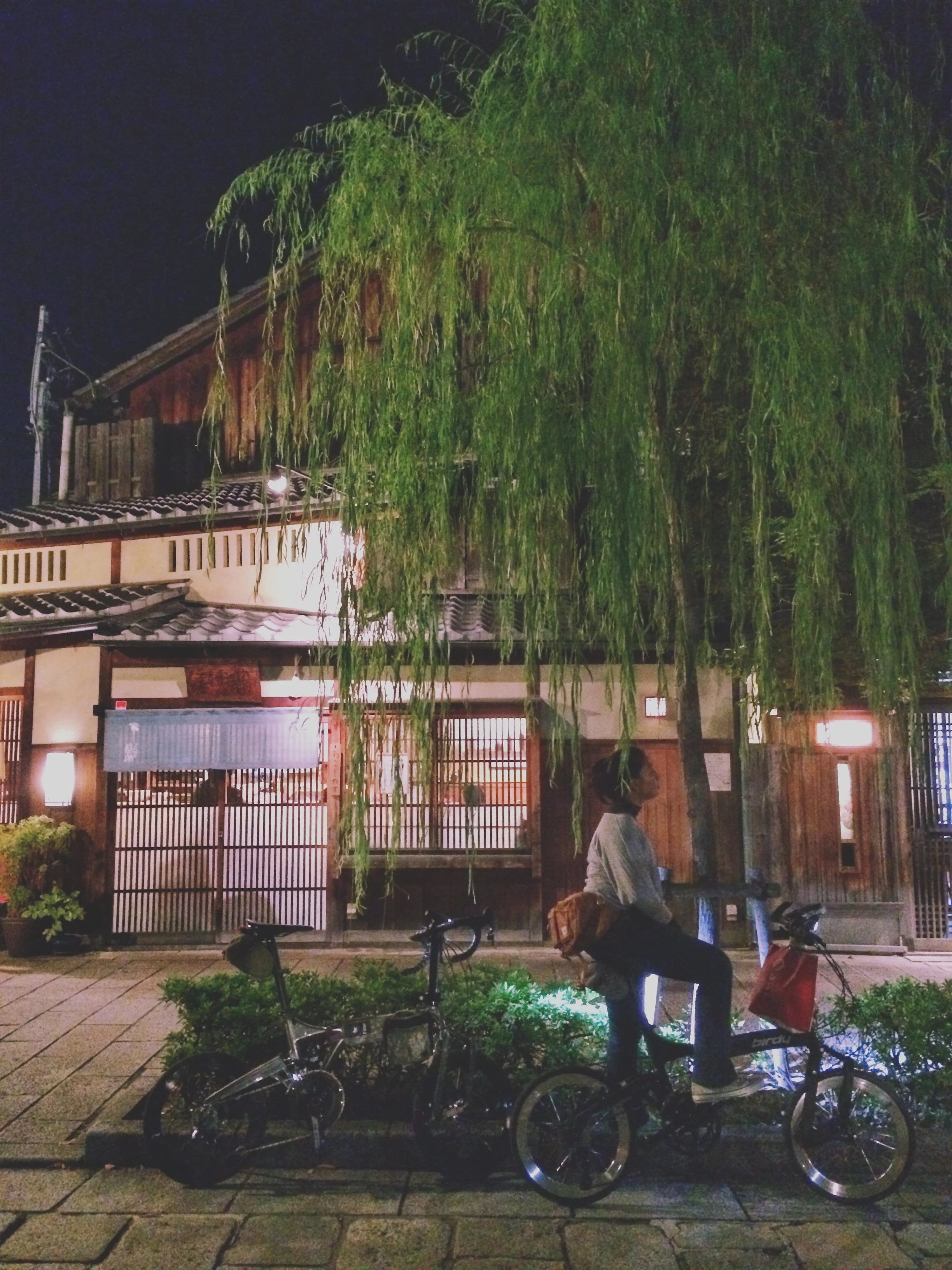
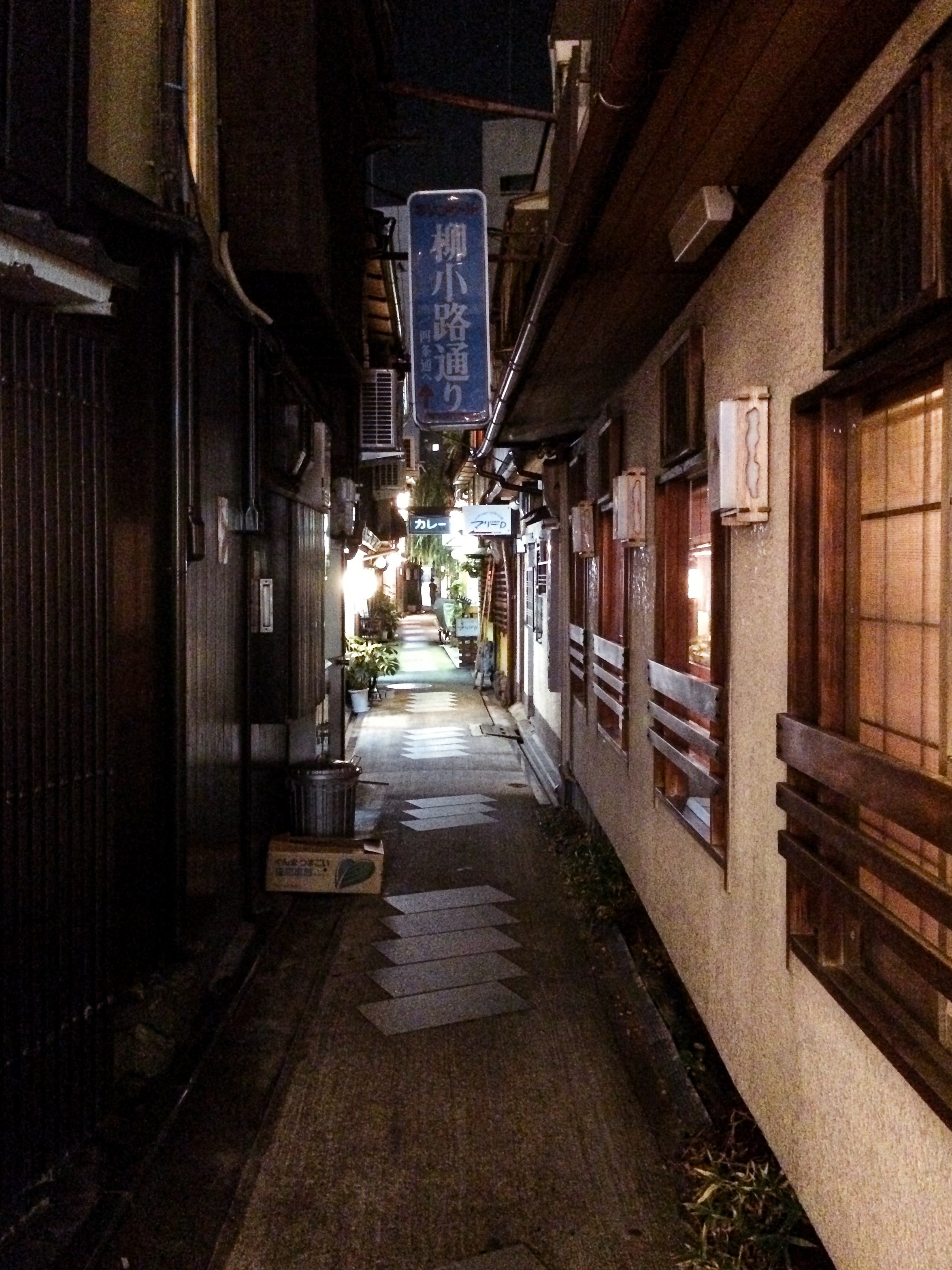
The first time Nadiah and I were in Kyoto in 2015 was for our 5-day hike along the Nakasendo Trail, but spent very little time exploring Kyoto itself. This time, we set aside a few days to see the city before touring Noto. Geographically Kyoto isn’t really close to our starting point in Kanazawa and did require a train ride from Narita Airport where we touched down, but this was easily done with the Shinkansen. The unfinished business from one year ago meant it was a necessary stop for both of us for this particular trip. Our time there was brief, but made easy by the fact that we had our folding bikes to explore the city. Our Birdy bikes had been upgraded to 20” wheels from the stock 18”, but they were still small and nimble enough to handle city exploring quite nicely. Our route in Kyoto covered around 40km, riding to Arashiyama along the Katsura River and to the golden pavilion Kinkakuji, while also exploring the Gion district.
Kyoto ten years ago was vastly different from the over tourism of today. The route we chose along the Katsura River was blissfully uncongested, and we could cycle leisurely all along the road to Arashiyama without having to wait in line or dodge cars or skirt around pedestrians. Arashiyama itself was so open and deserted (by today’s standards anyway) that we were actually allowed to push our bikes through the bamboo grove itself. In Gion it was the same scenario, we were pretty much given free rein to ride our bikes through - you’ll see that our pictures show barely any other tourists besides ourselves. The teahouses didn’t have any bans on foreign tourists, so we never had any issues there. At one point, I even spotted a Geisha hurrying to her evening appointment, and a subtle wordless exchange indicated that she consented to him snapping a quick picture.
Will we return to Kyoto sometime soon? Perhaps, considering there are many parts of Kyoto that we have yet to visit. Next up - onwards to Kanazawa!
Kanazawa: Our starting point
Kanazawa is a beautiful and historical city that serves as the capital of Ishikawa Prefecture. There's so much to explore here thanks to the largely well preserved historical districts, since Kanazawa was largely spared from WWII bombing. All great Japanese cities will have a grand old castle, in this case it was the Kanazawa Castle - one of the most important castles in the Edo Period and the historic seat of the powerful Maeda Clan. The Maeda family were wealthy samurai nobility; daimyo lords who ruled what is now Ishikawa Prefecture from 1583 to 1869, spanning 14 generations. Adjacent to the castle park is the sublimely beautiful gardens of Kenrokuen, one of Japan's "three best landscape gardens" and considered by many to be the most beautiful of them all.
Other historical attractions include the Nagamachi Samurai District of well-preserved samurai residences, as well as the Higashi Chaya teahouse district that is a traditional geisha entertainment area. Kanazawa is also a major producer of gold leaf which is used in temples, food, crafts and lacquerware. And obviously thanks to its location along the Sea of Japan, the fresh seafood in Kanazawa is unparalleled, and the bustling Omicho Market is definitely a must visit for culinary enthusiasts. In short, there’s a little of everything in the city. For those who have been to Kyoto, Kanazawa feels very much like it without the tourist crowds, and is sometimes dubbed "Little Kyoto."
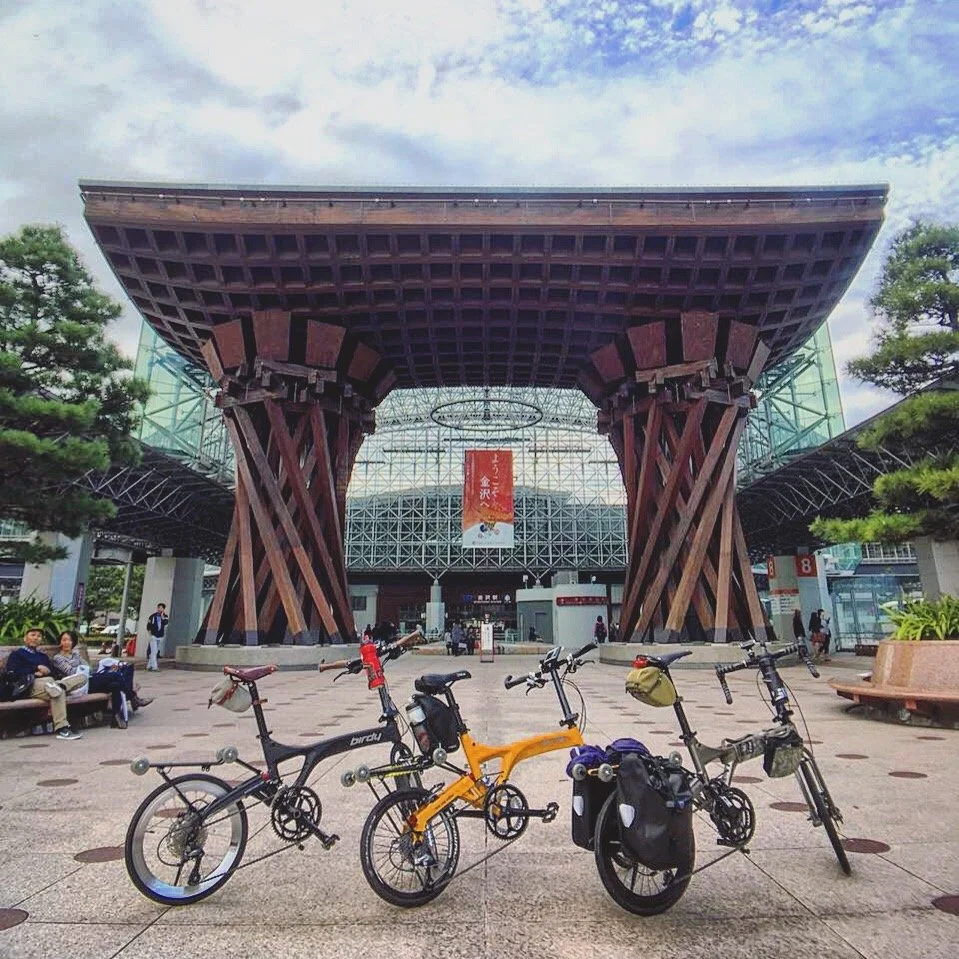
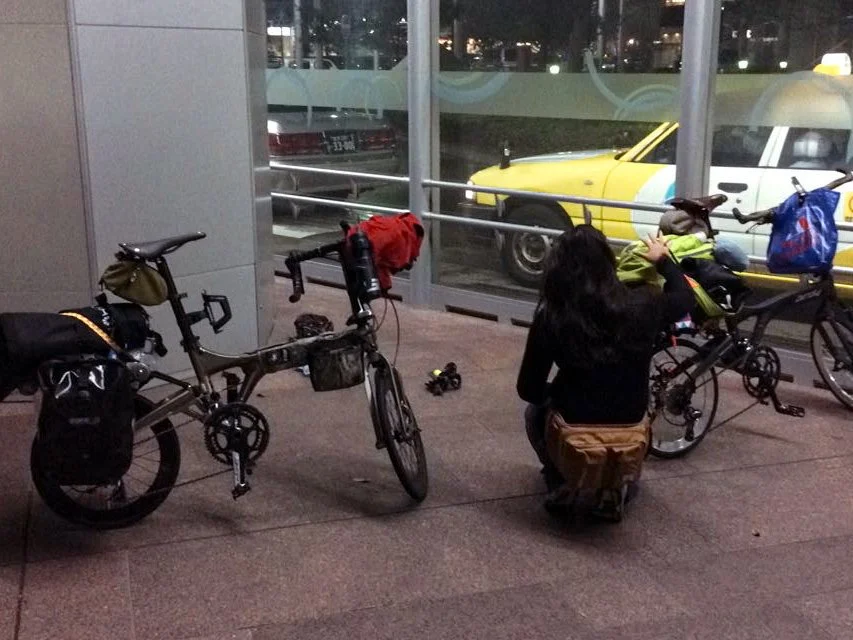
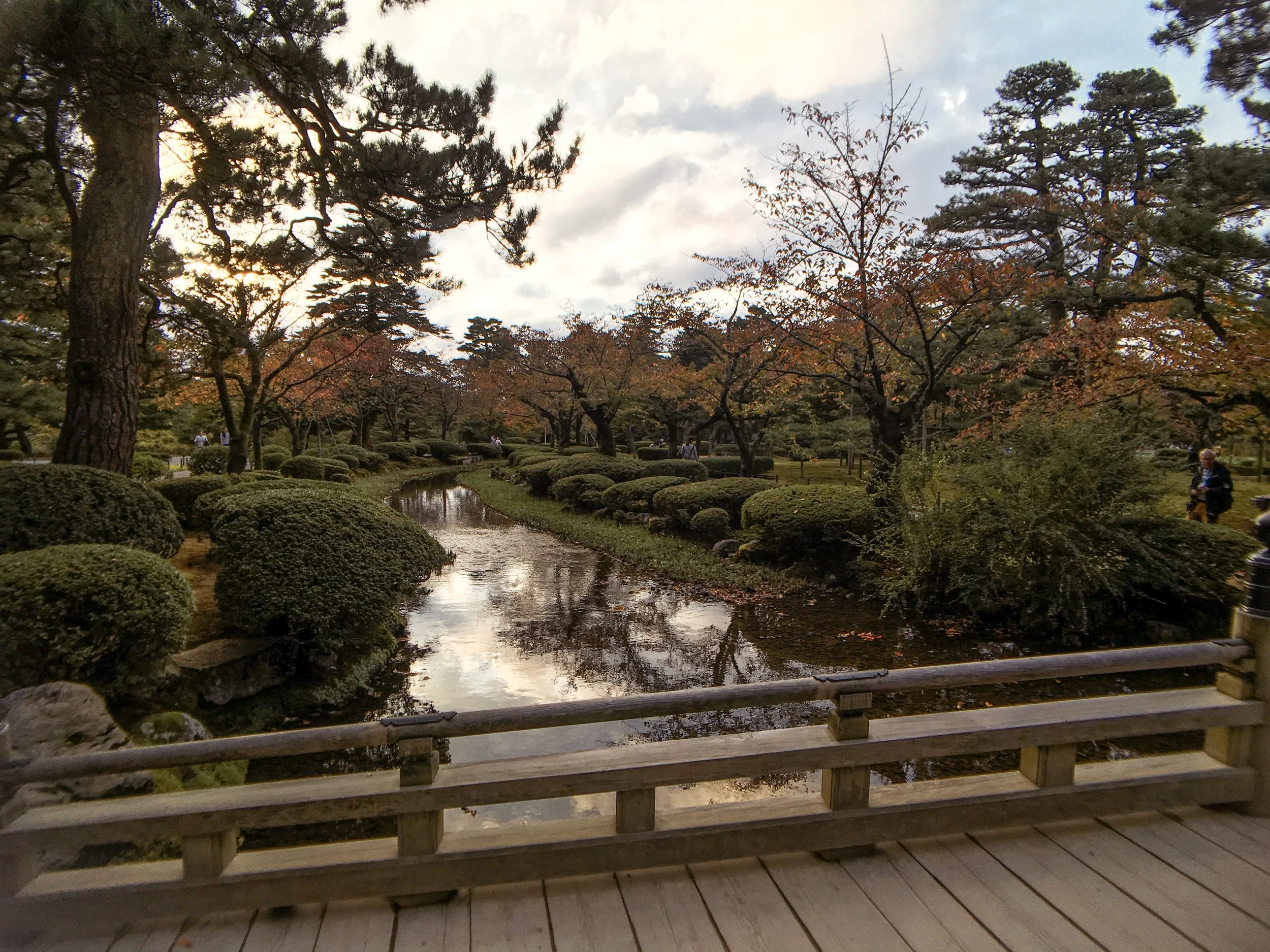
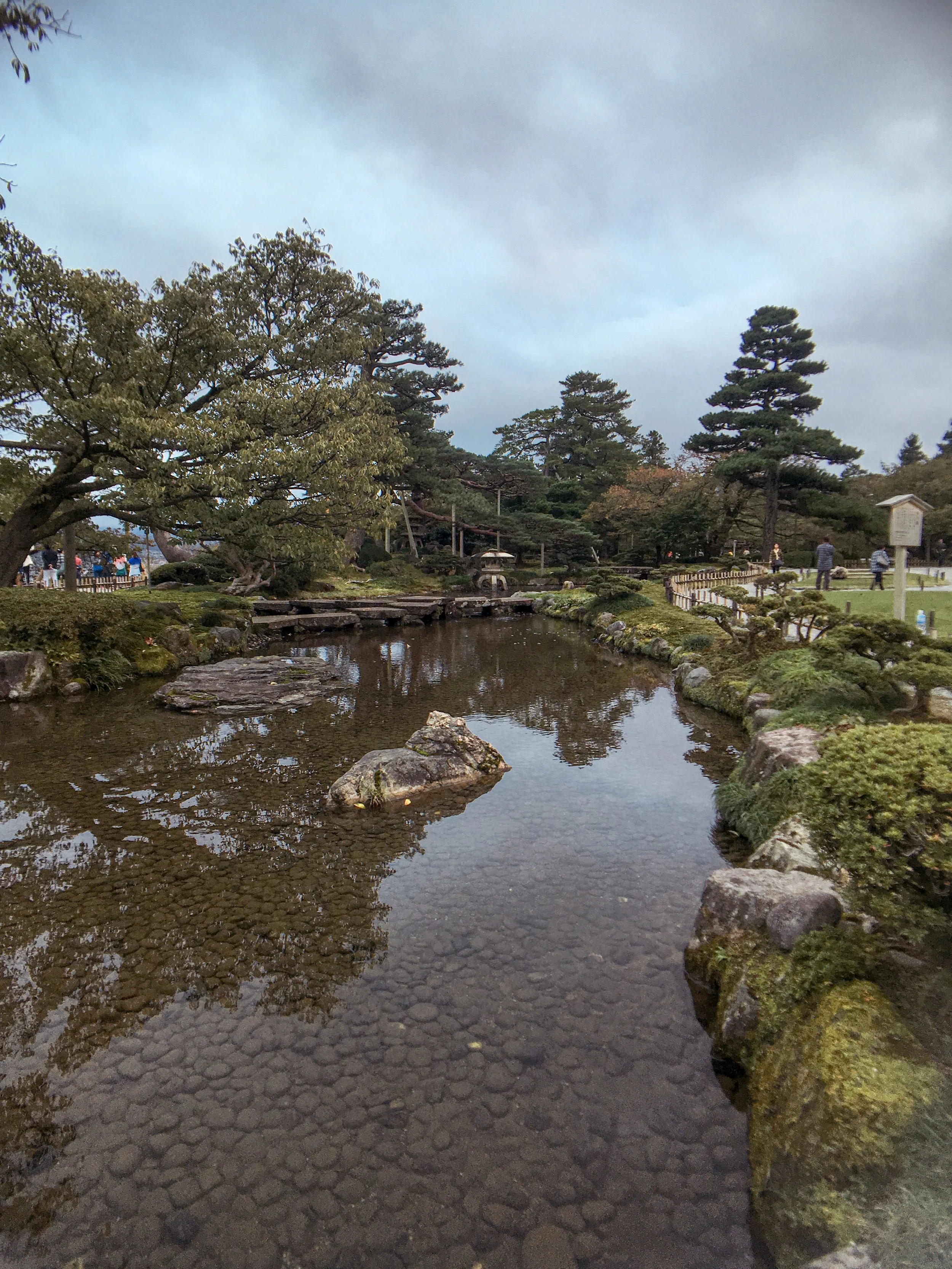
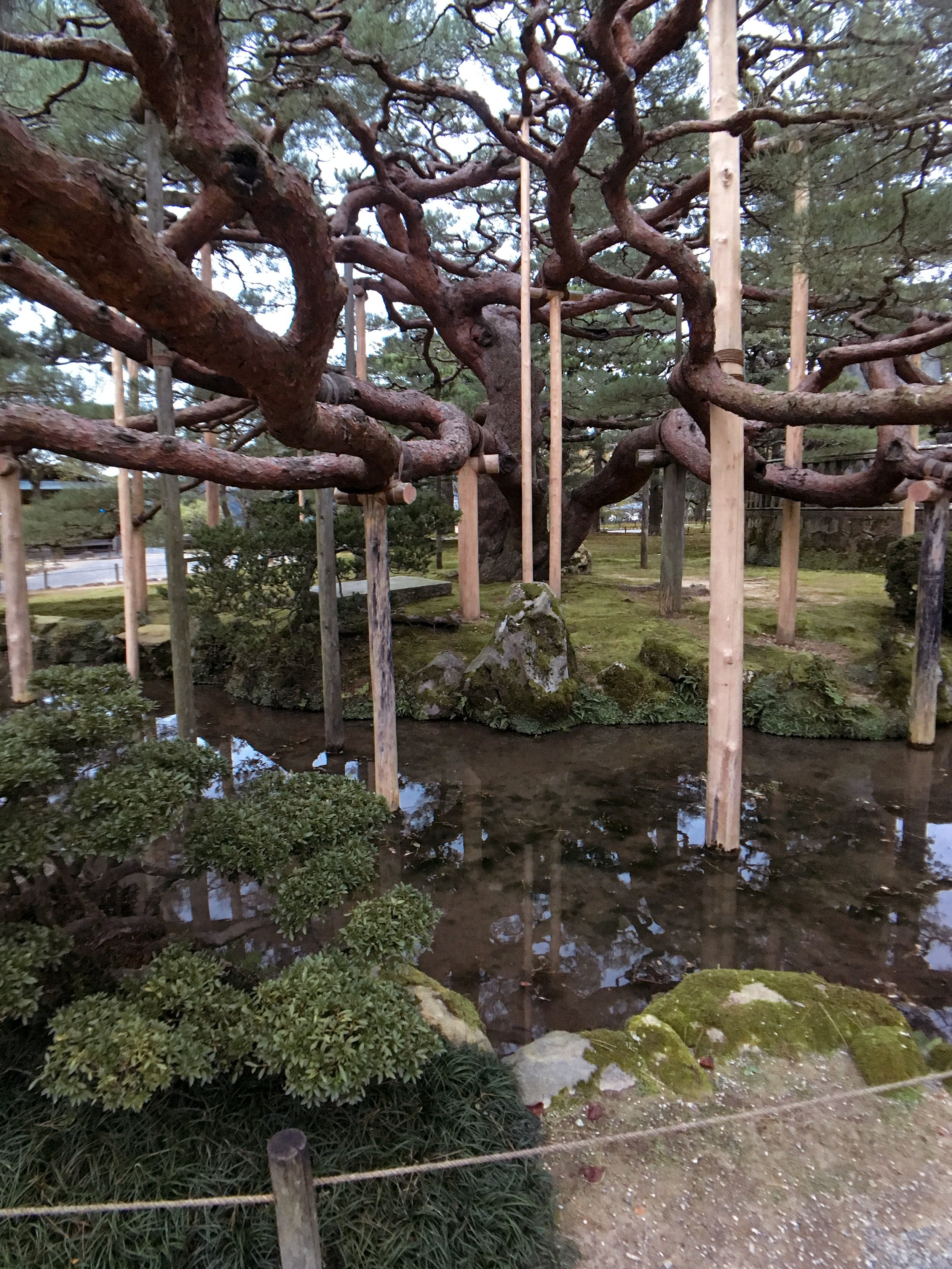
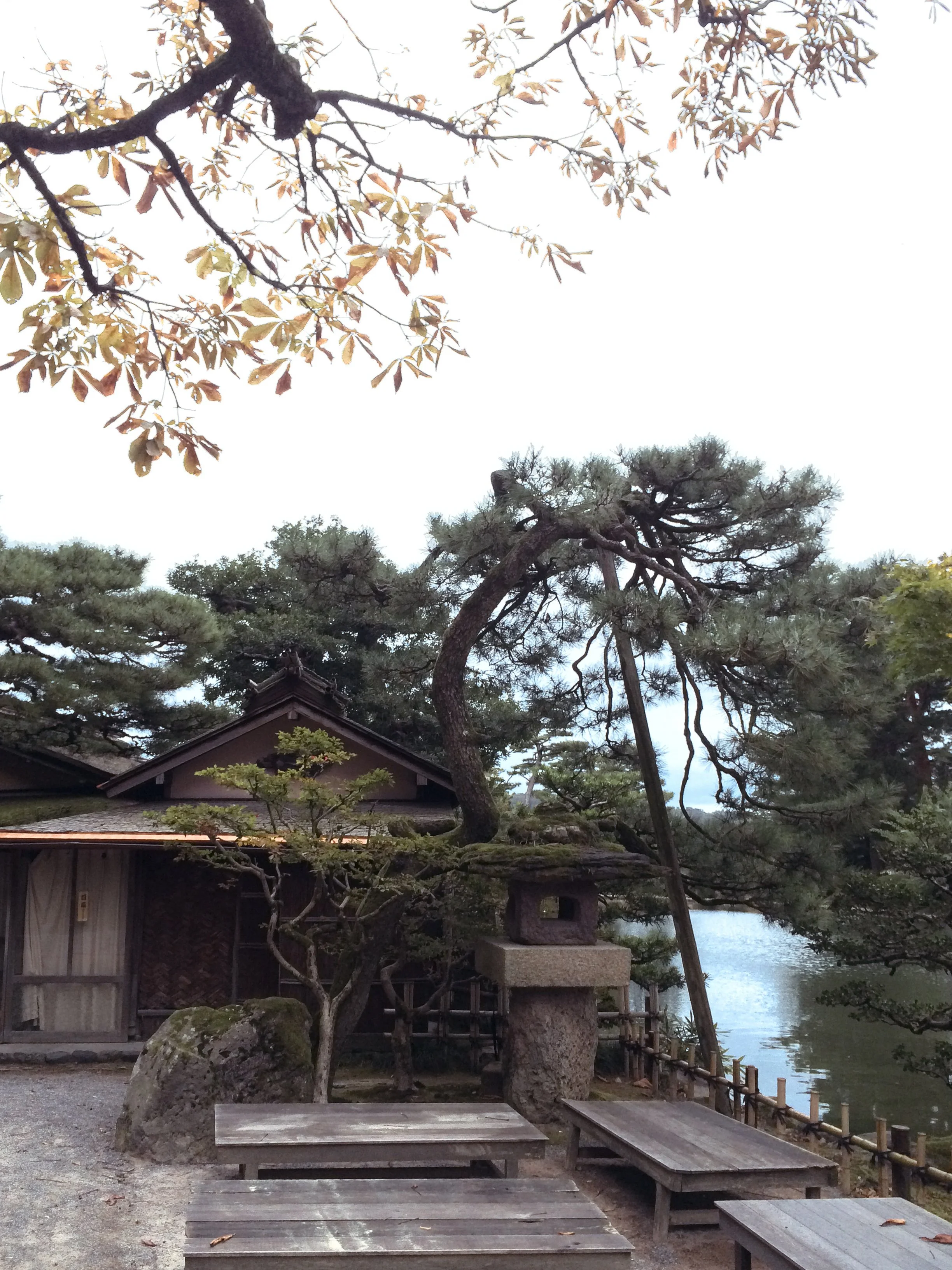
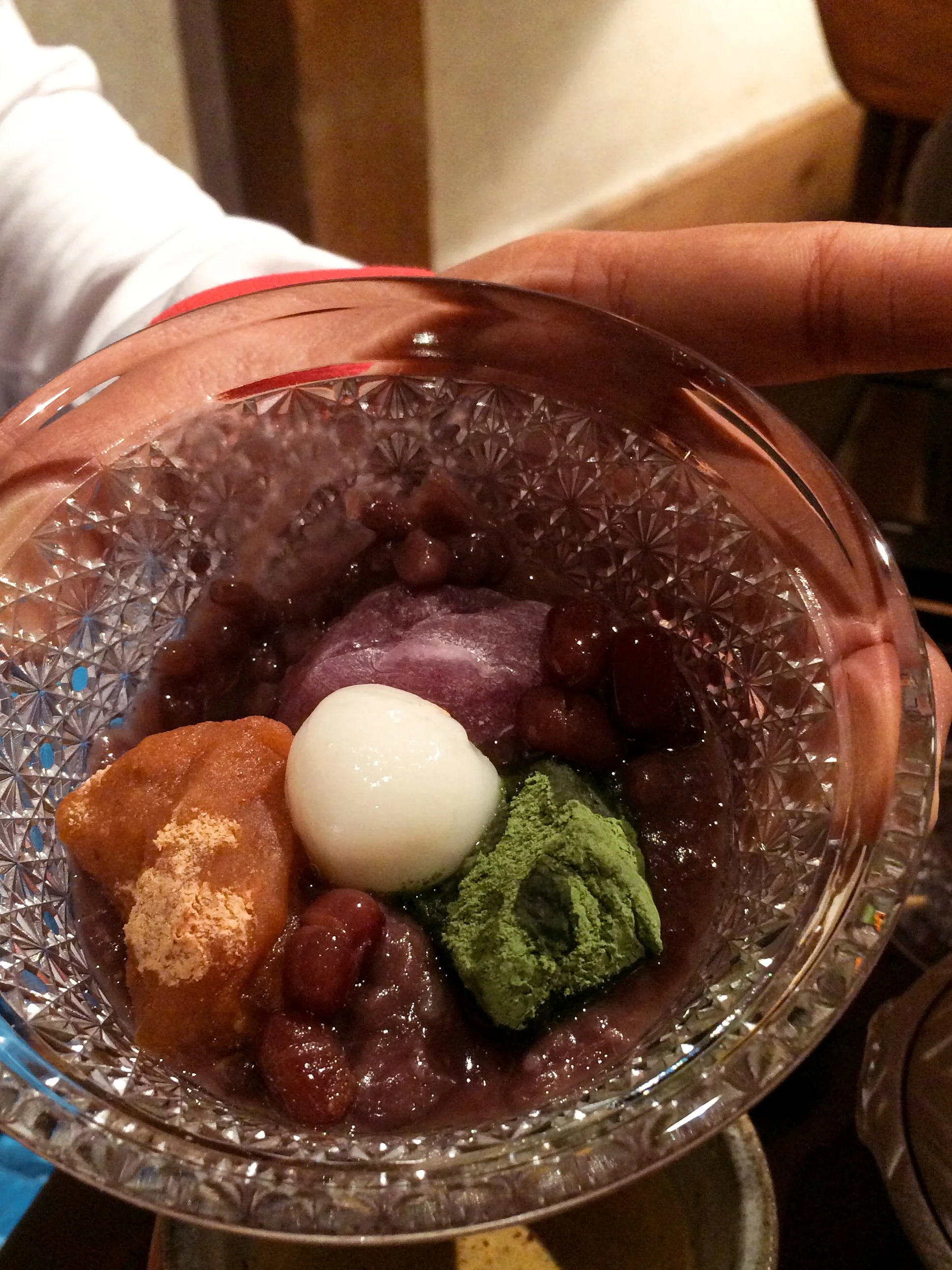
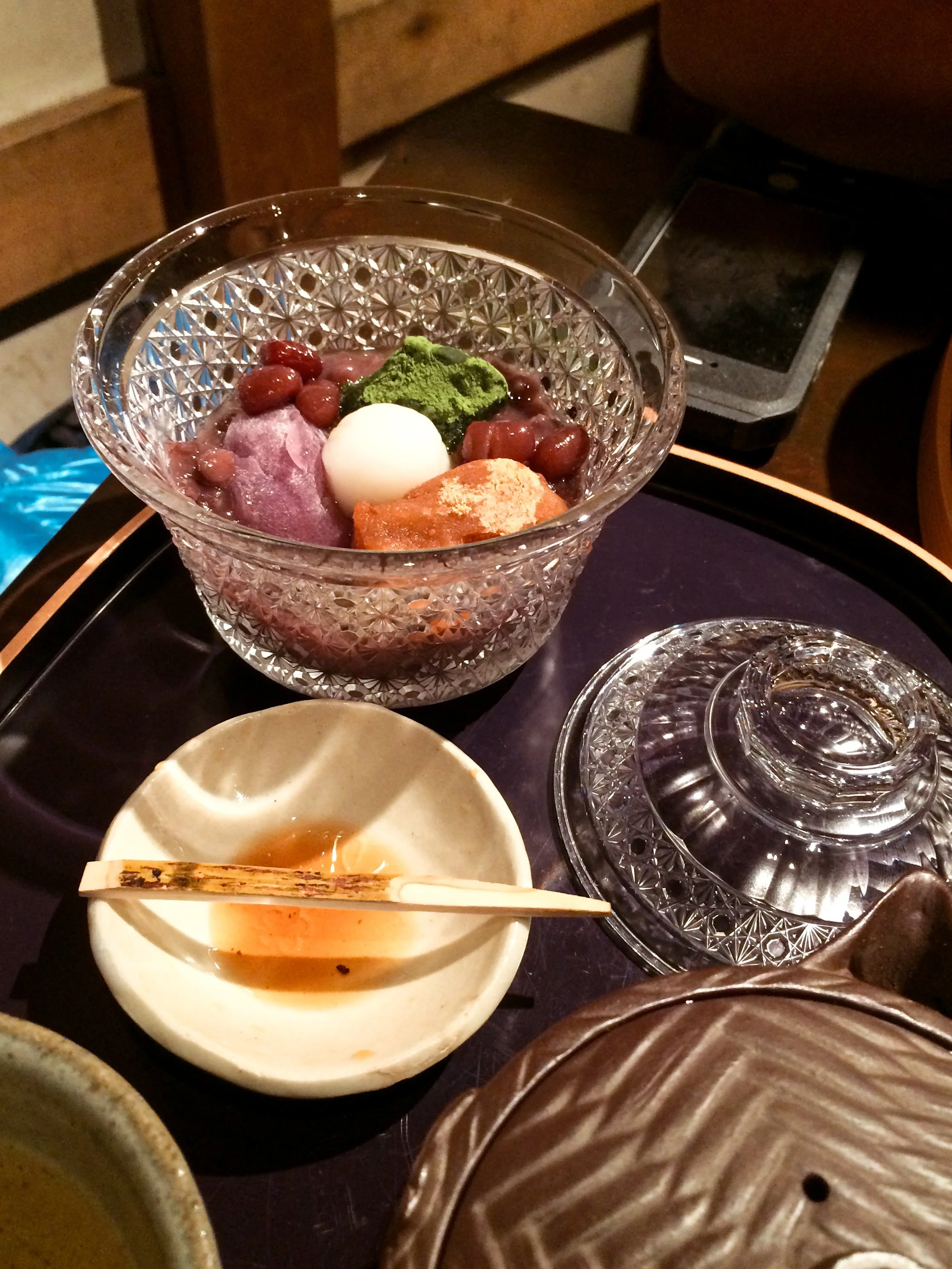
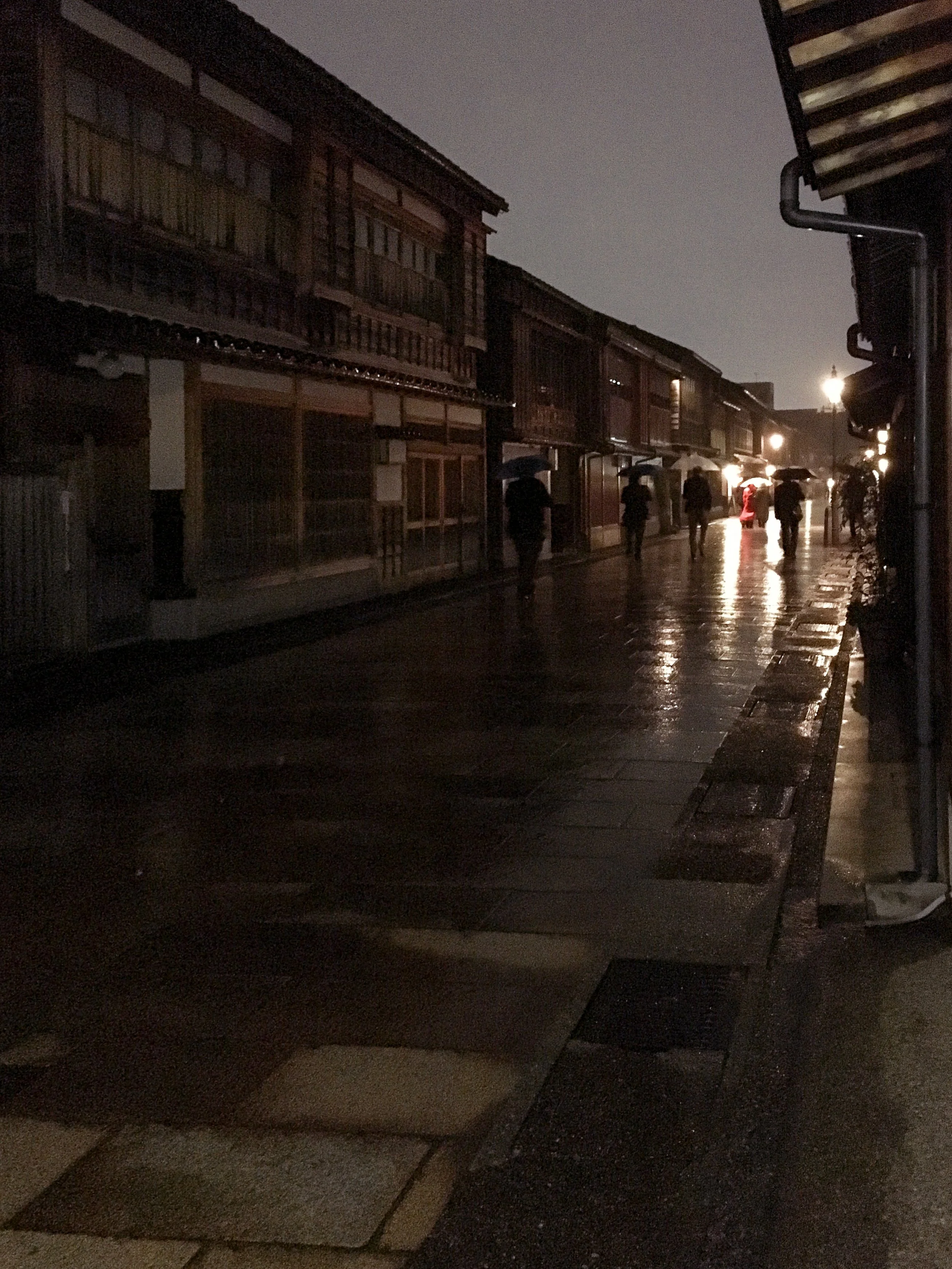
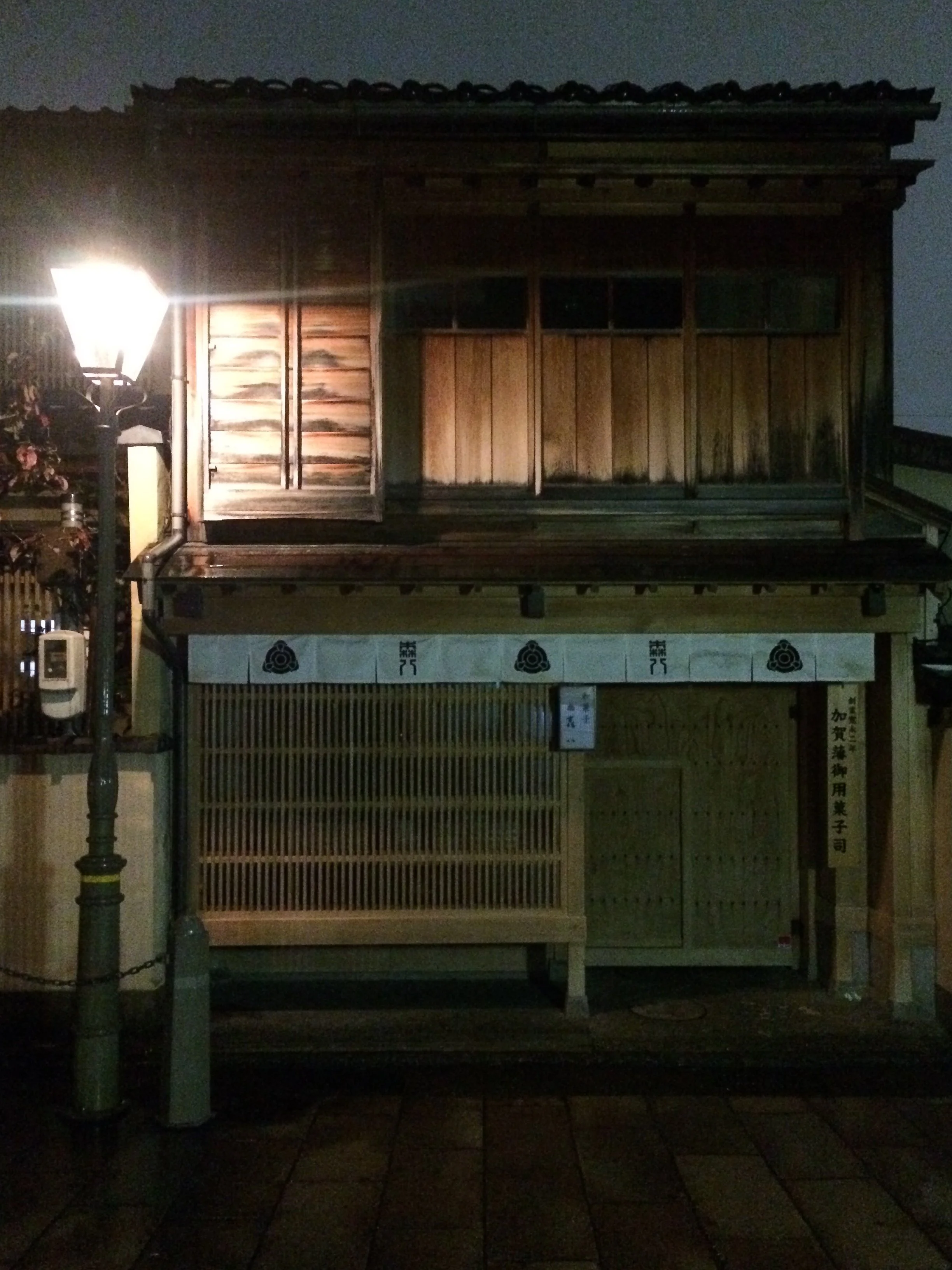
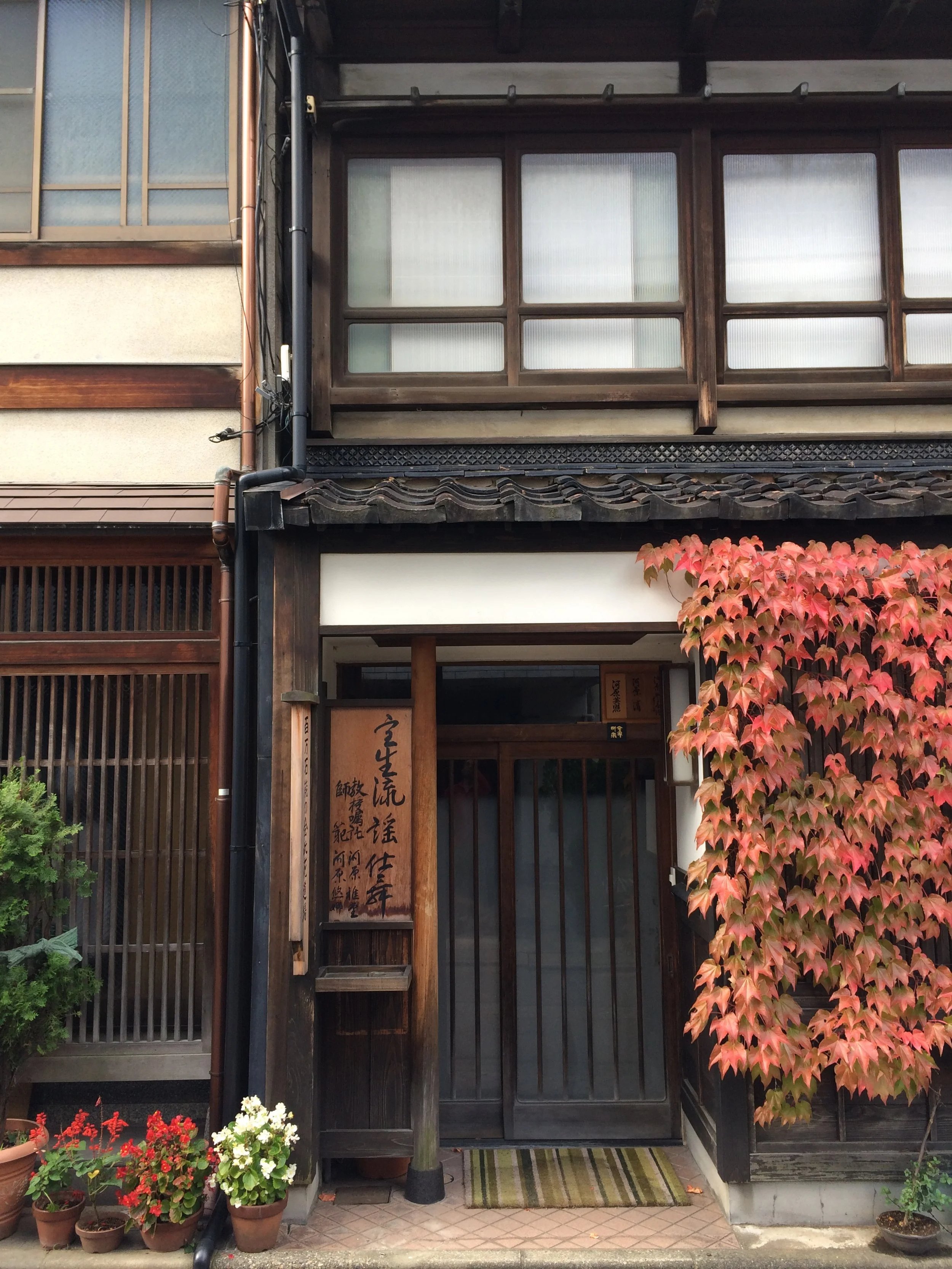
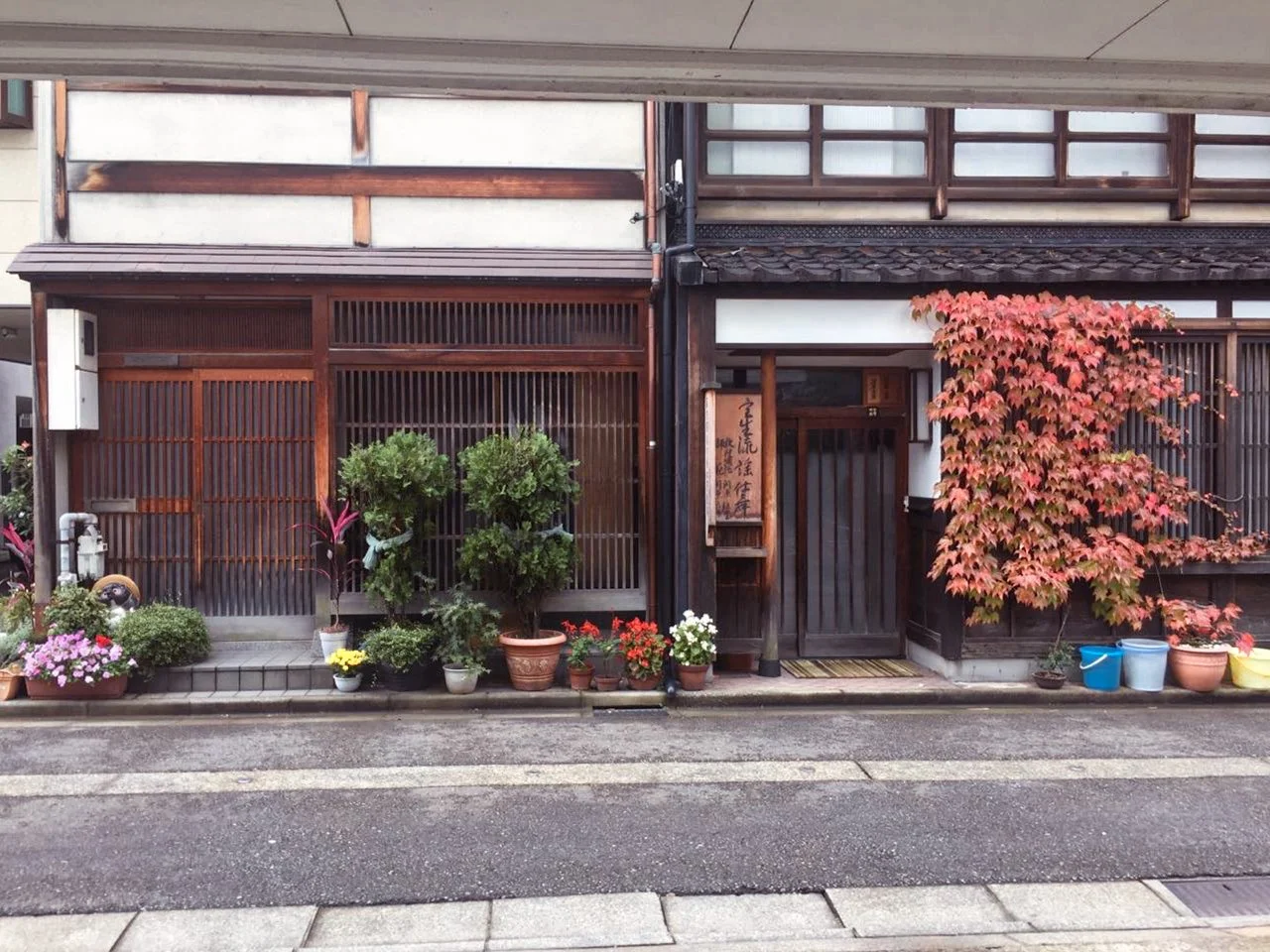
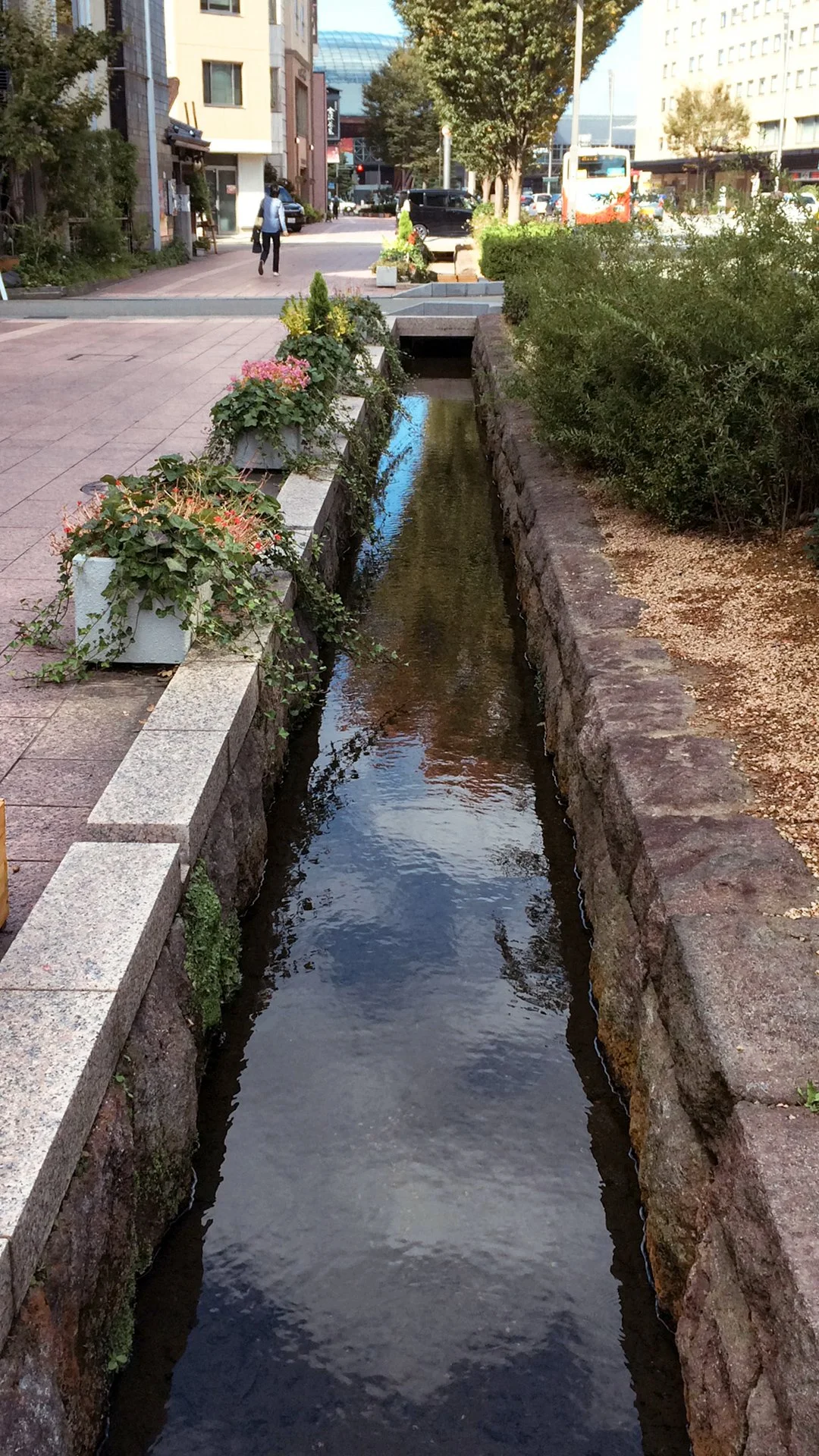
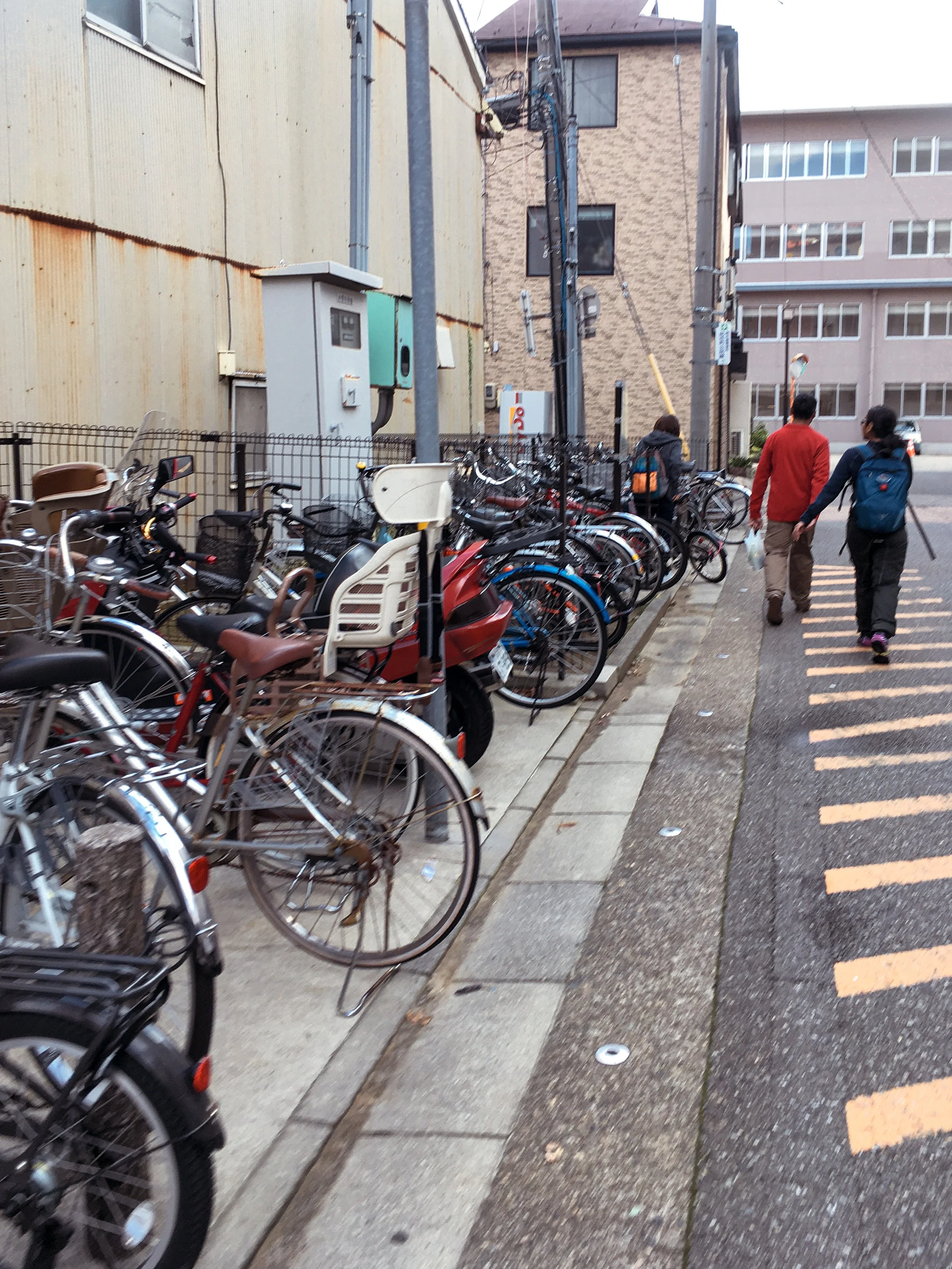
Unfortunately because of some pre-tour errands we had limited time to explore, and were forced to pick and choose what we wanted to see. It rained while we were there, so we only managed to make it to Kenrokuen Gardens while the Kanazawa Castle Park was closed at the time. We also managed to have a teatime stop at one of the teahouses in the Higashi Chaya District, before it started raining cats and dogs and we retreated to our Airbnb shortly after.
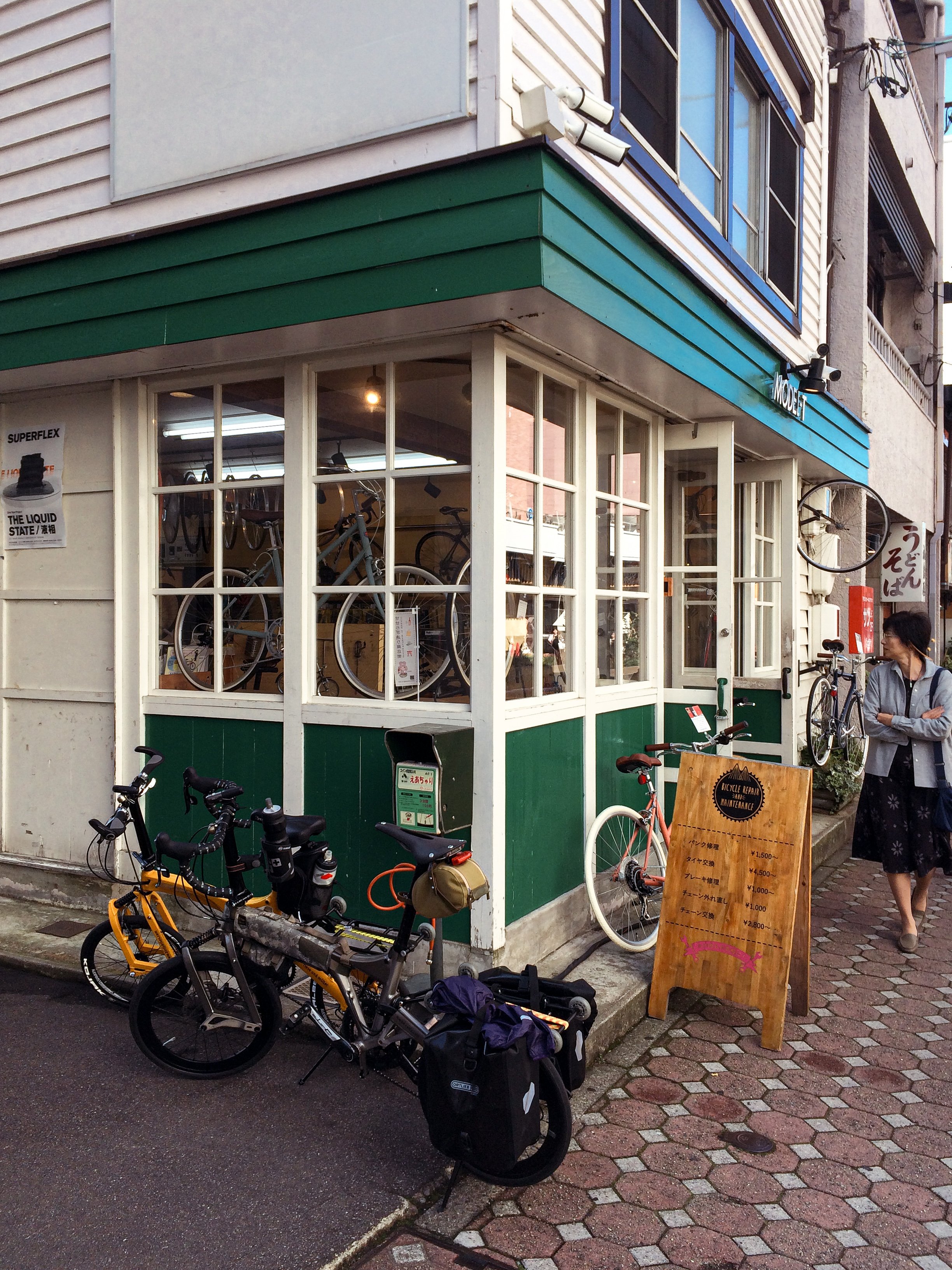
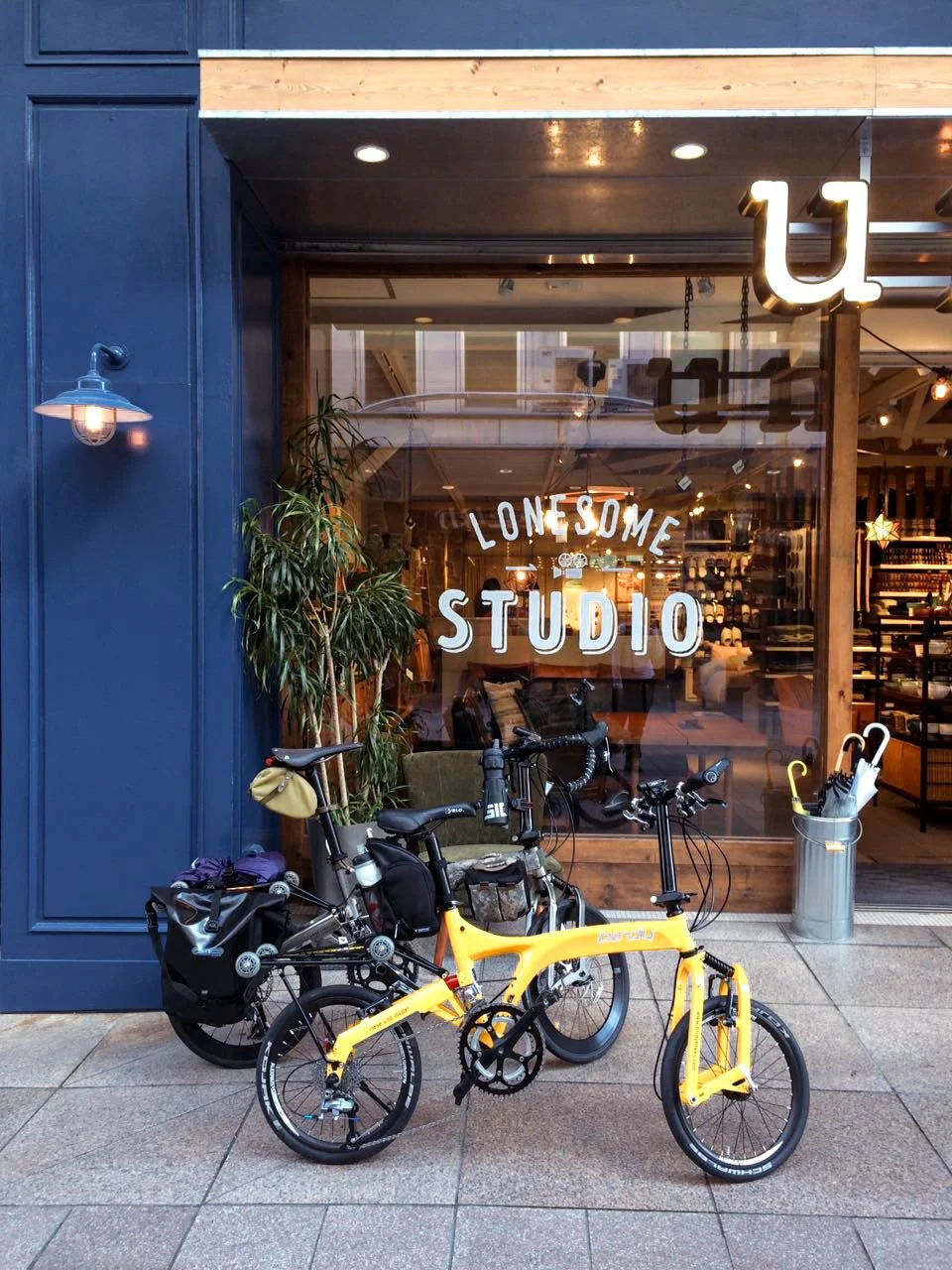
Earlier in the day, we made a resupply and service pit stop at Model T in Kanazawa, a quaint bike shop that had everything we needed including Panaracer spare tubes in the right size. Nadiah ended up having to replace her front tube, no thanks to a puncture from Malaysia that was patched up but didn't quite hold up. The mechanics at the shop also helped to check our disc brakes and derailleurs (always a good idea before heading to the mountains, after transport) to make sure that everything was in working order. With a few minor servicing tweaks, we were all set to go.
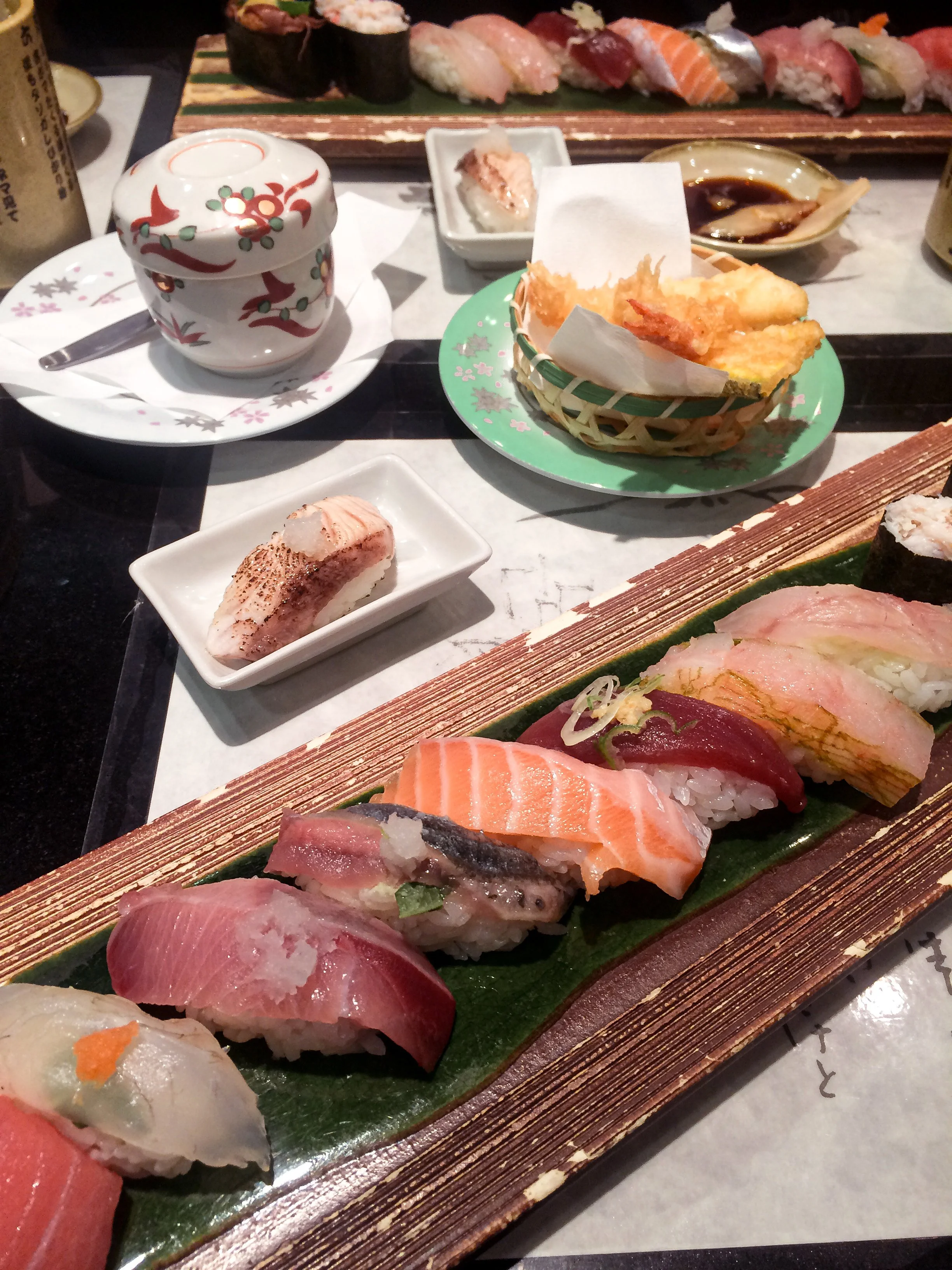
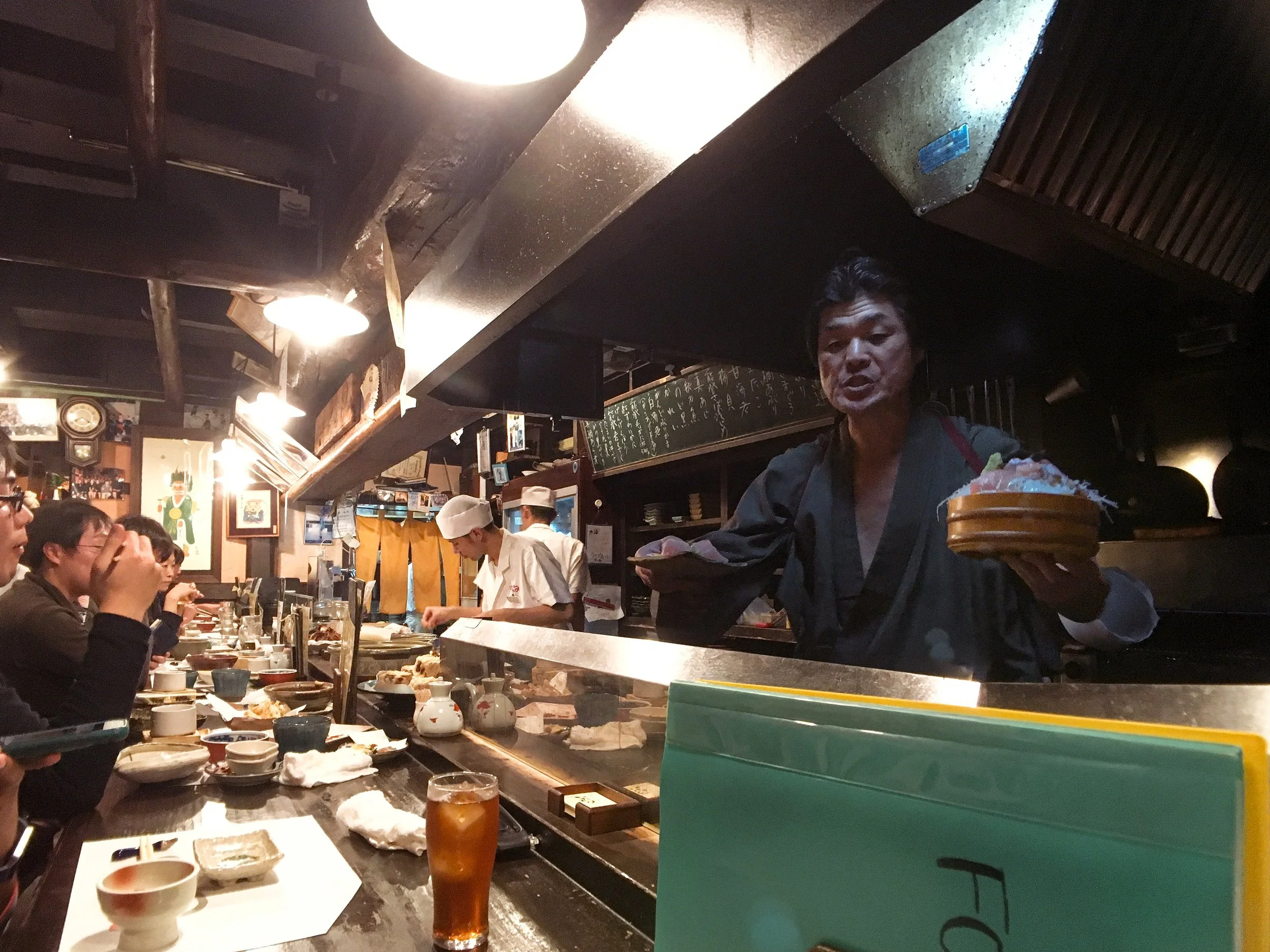
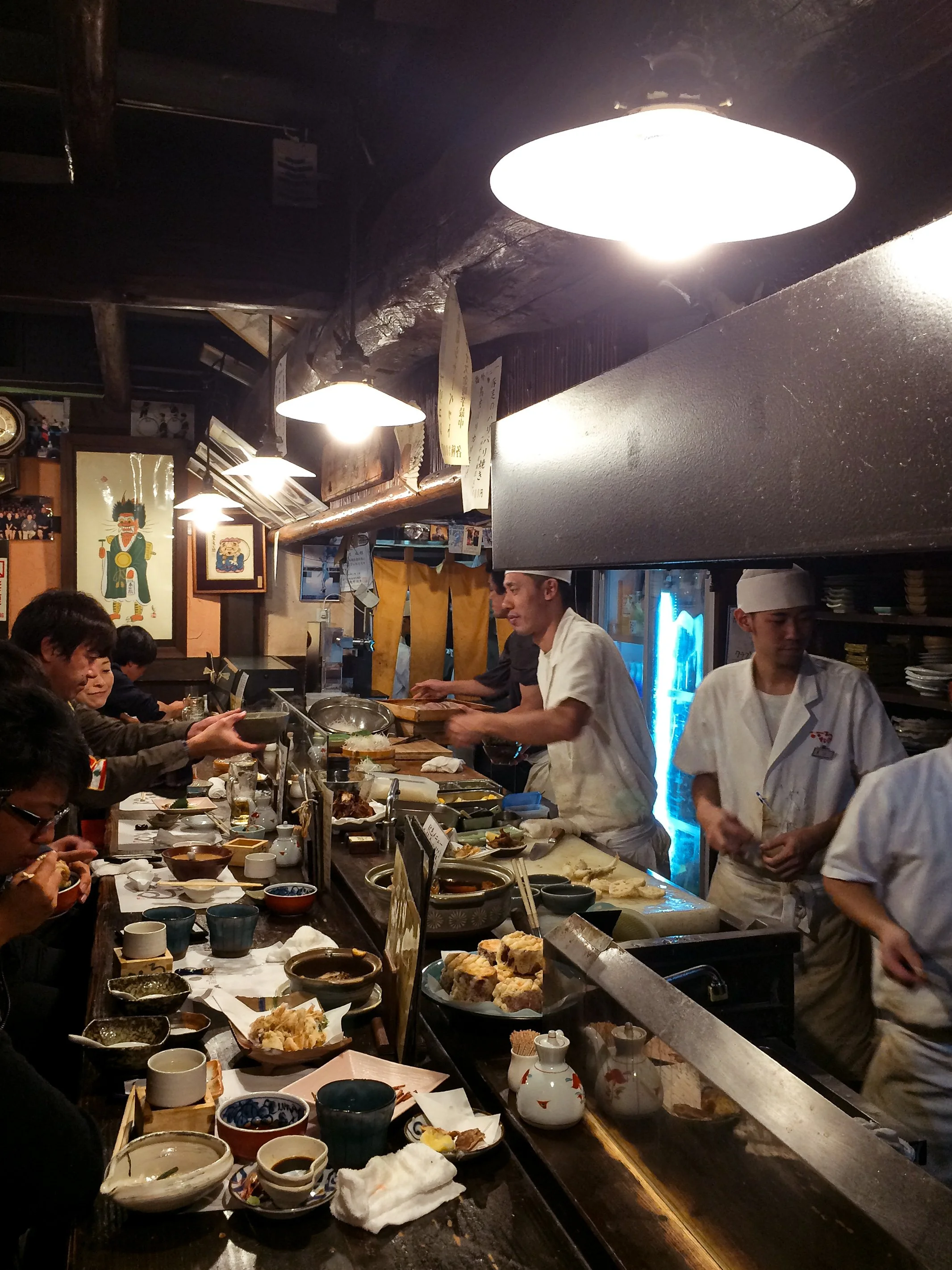
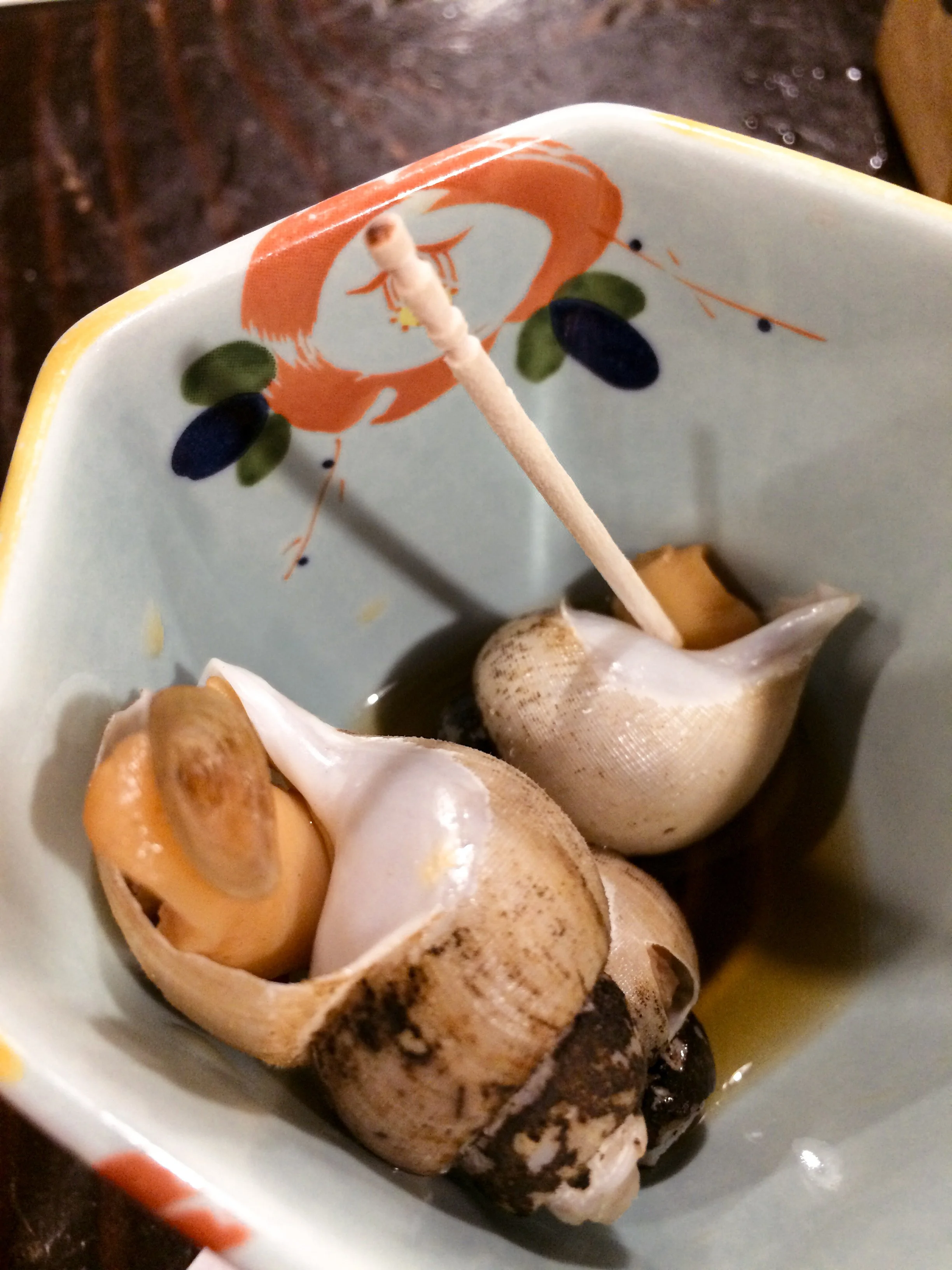
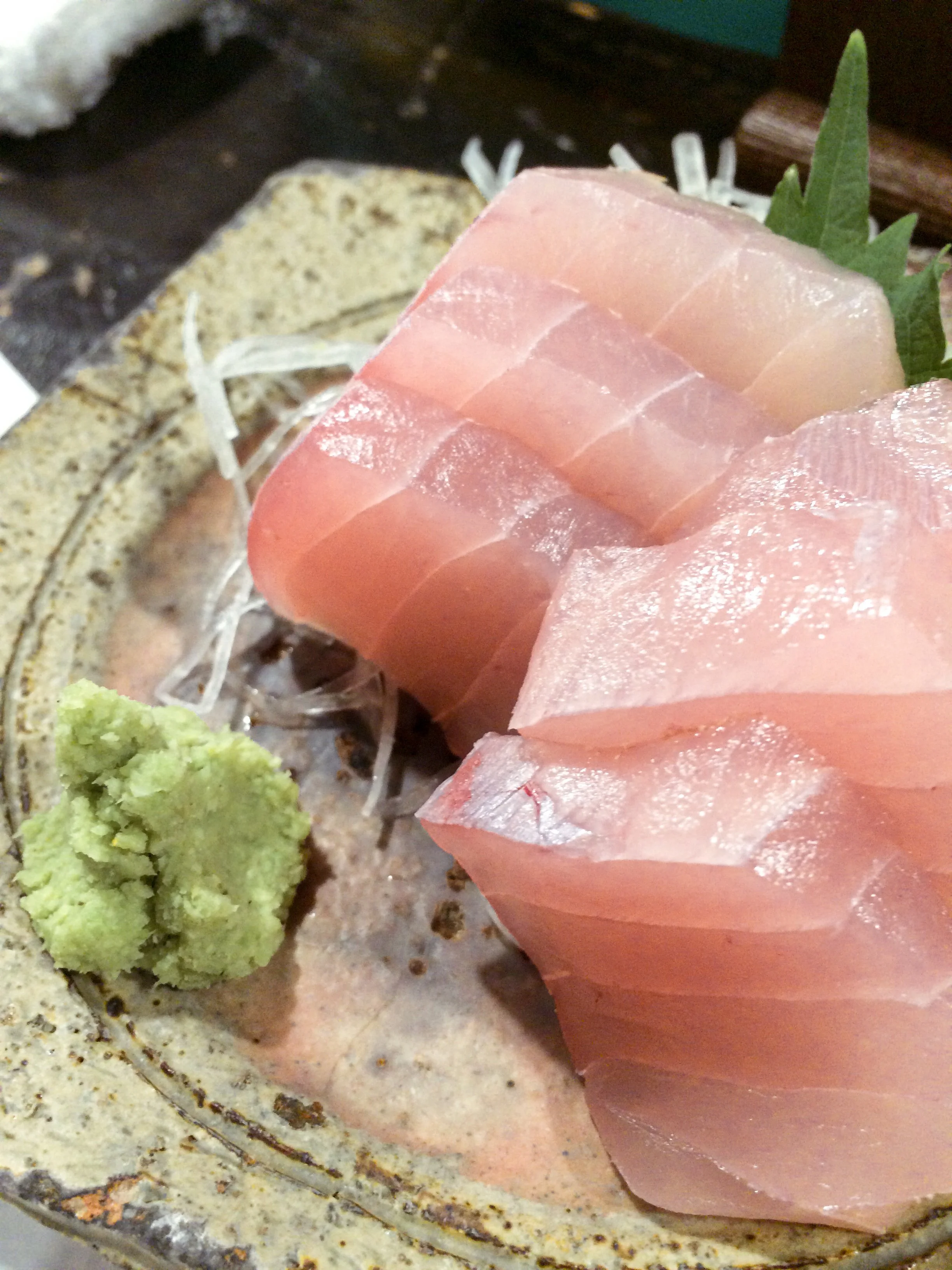
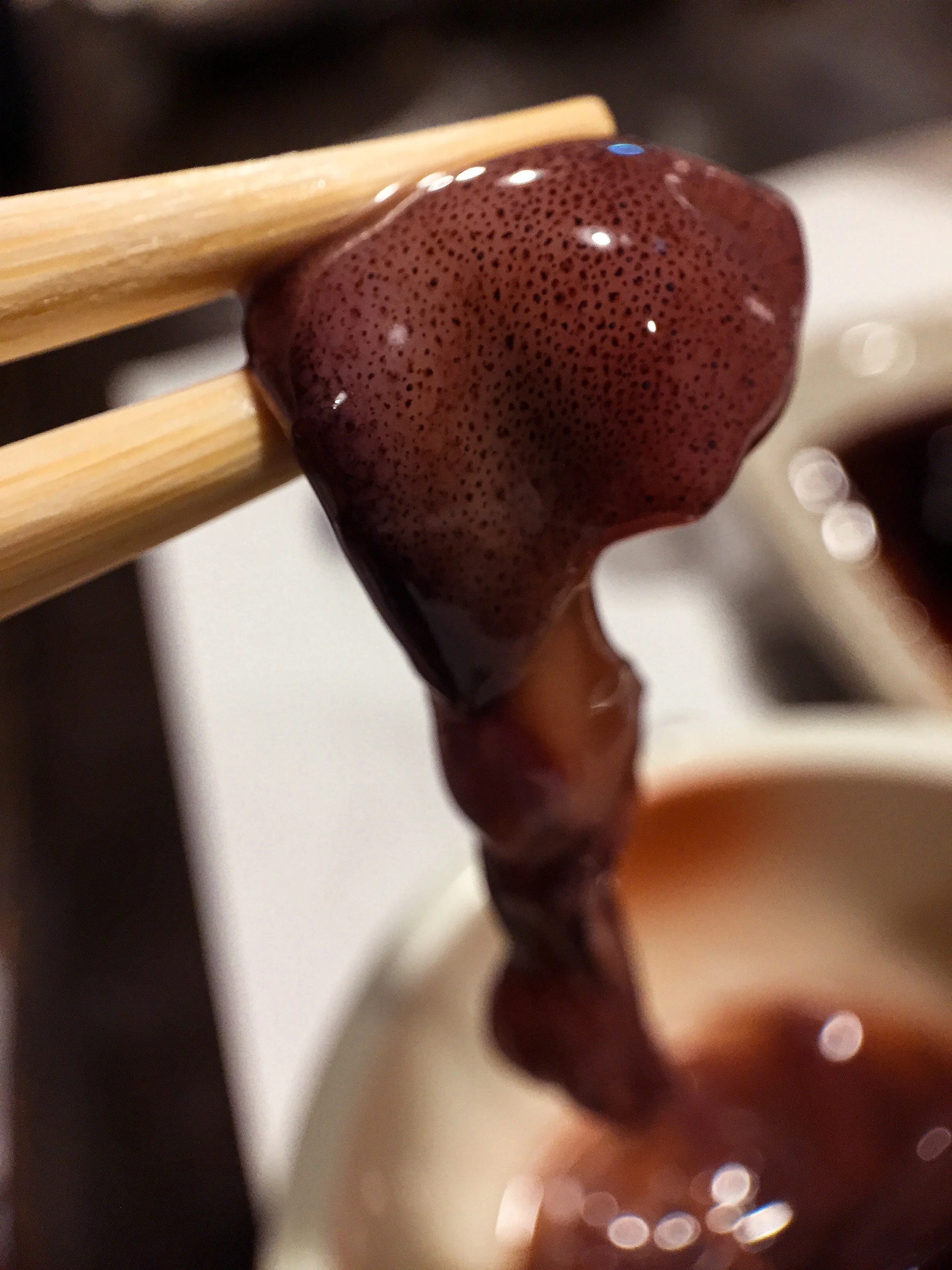
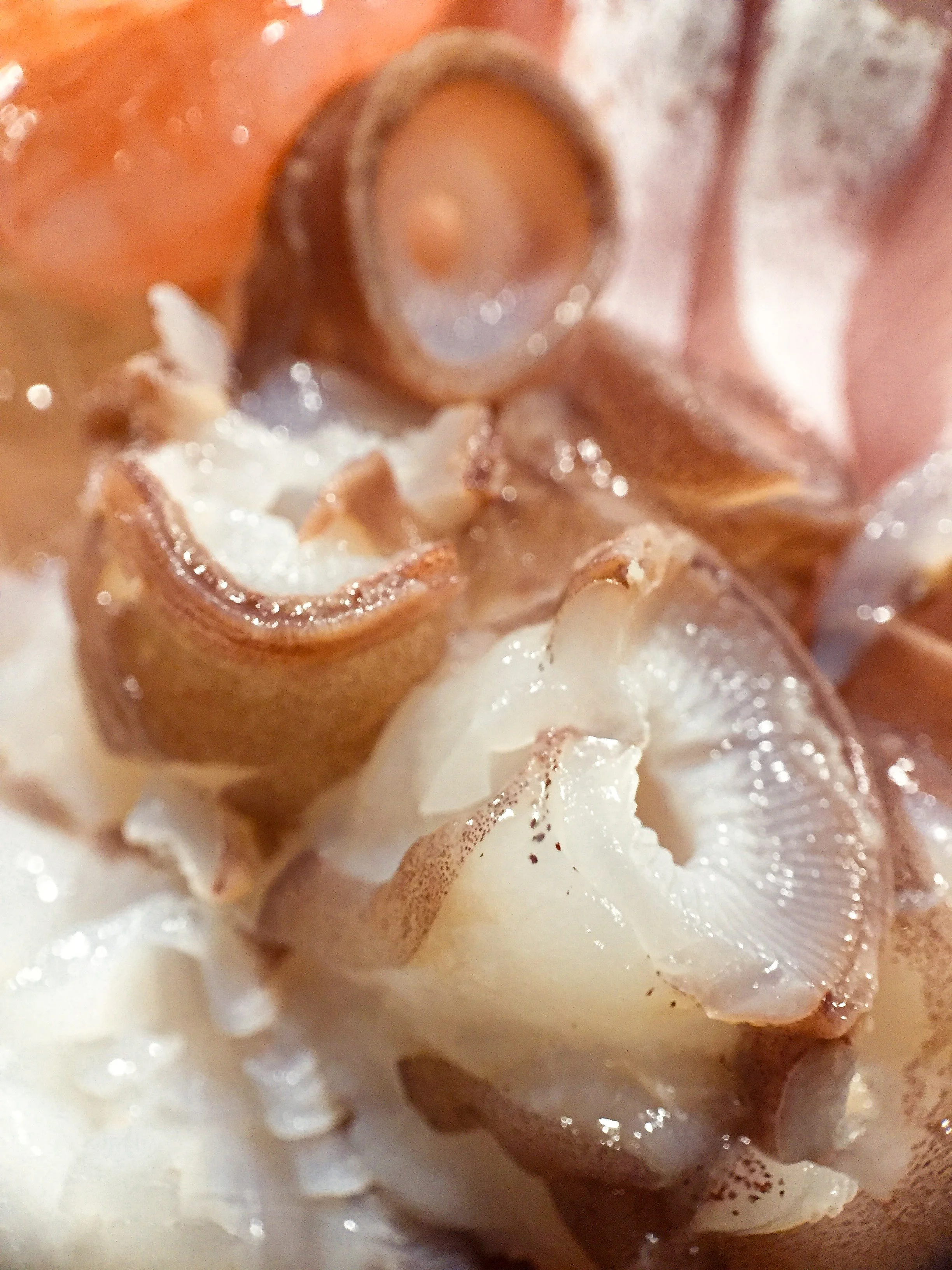
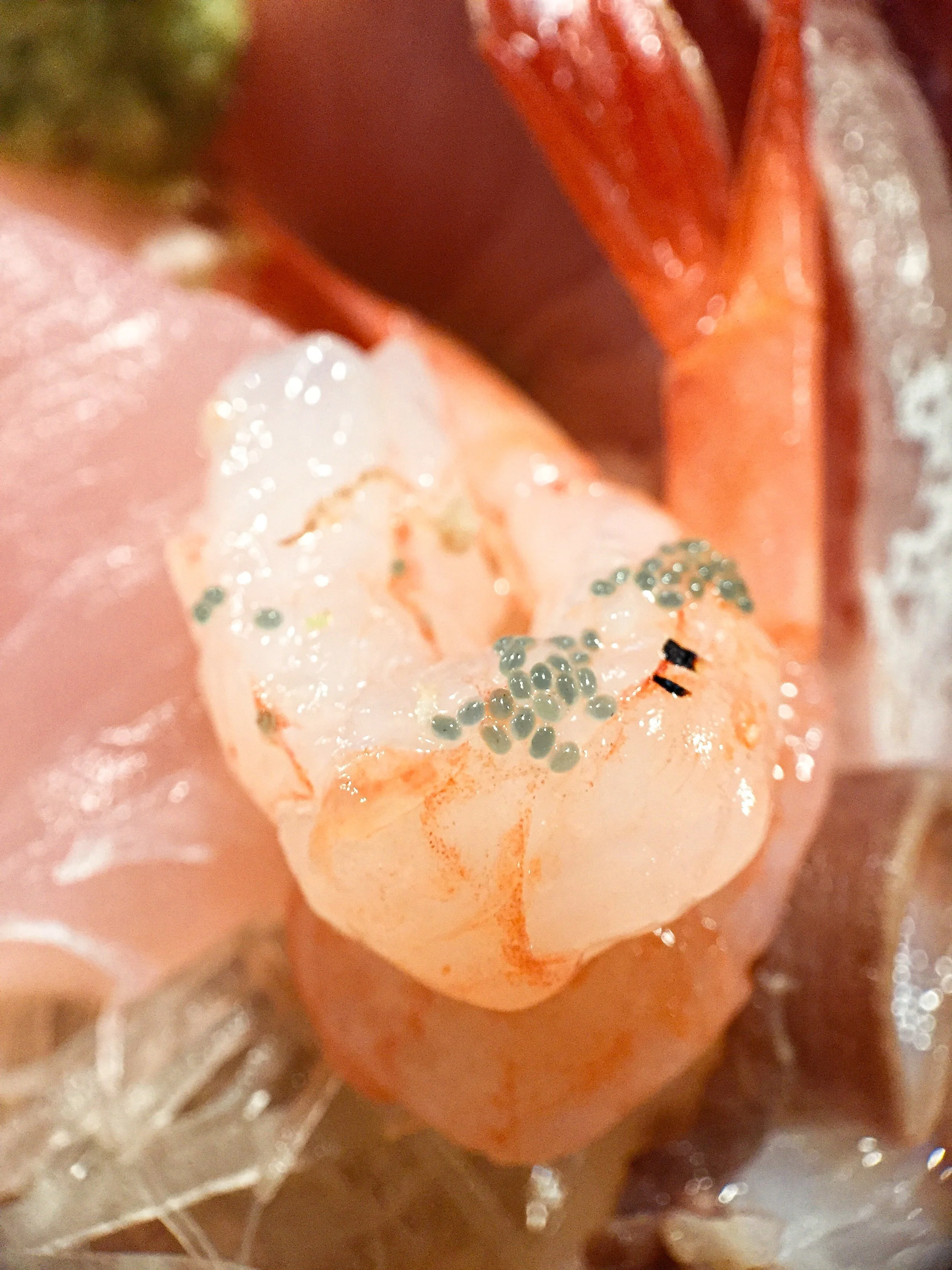
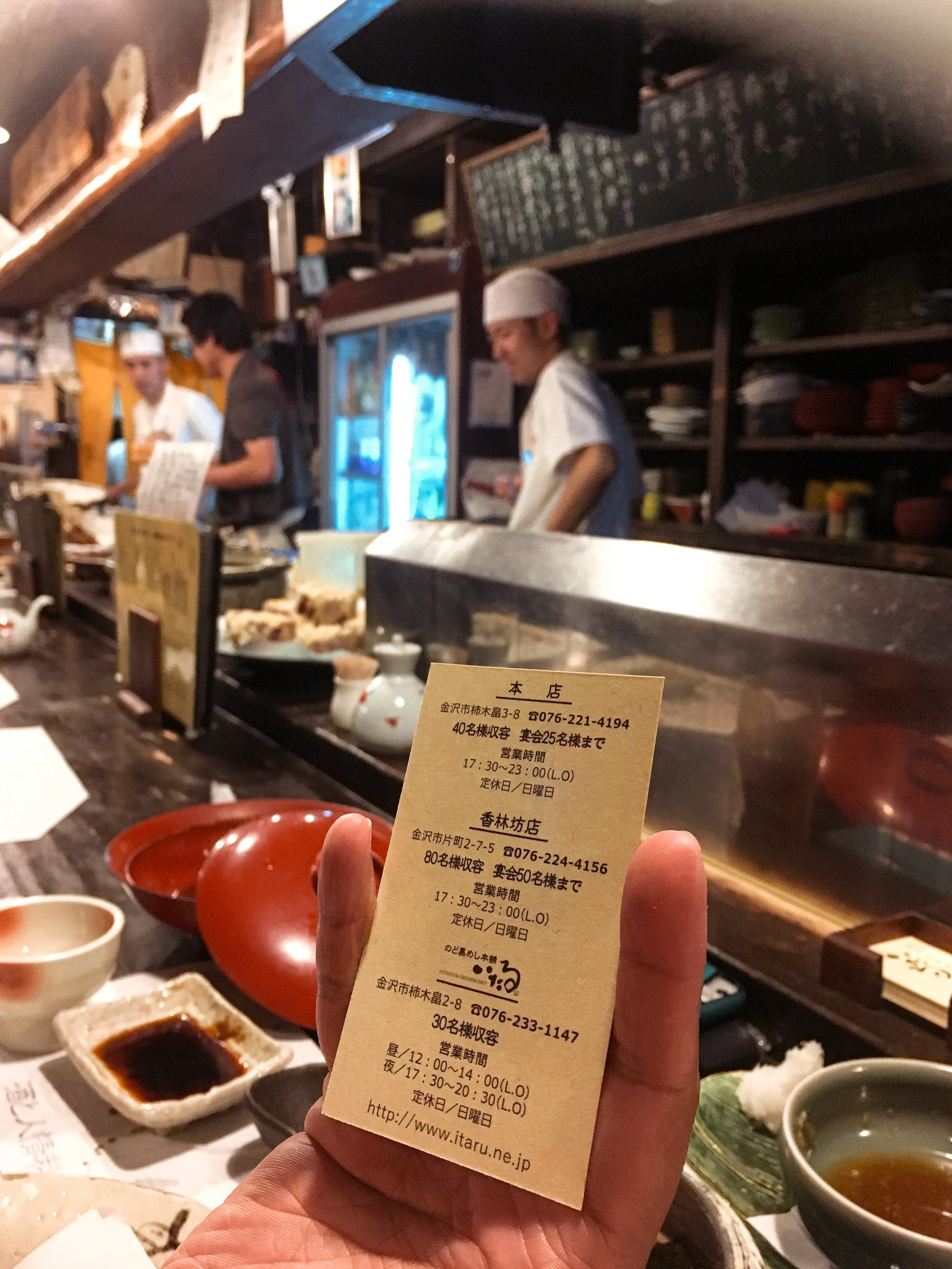
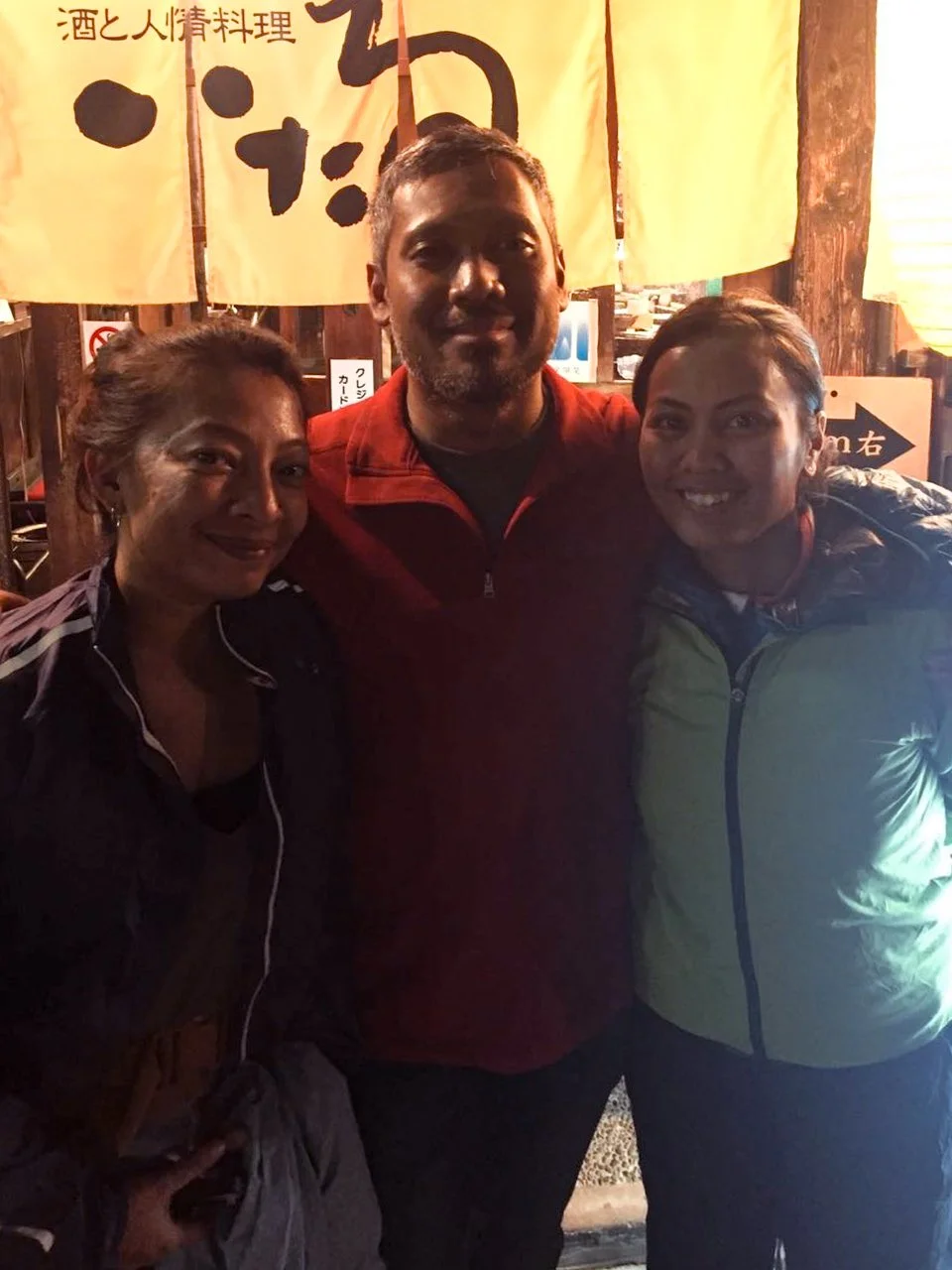
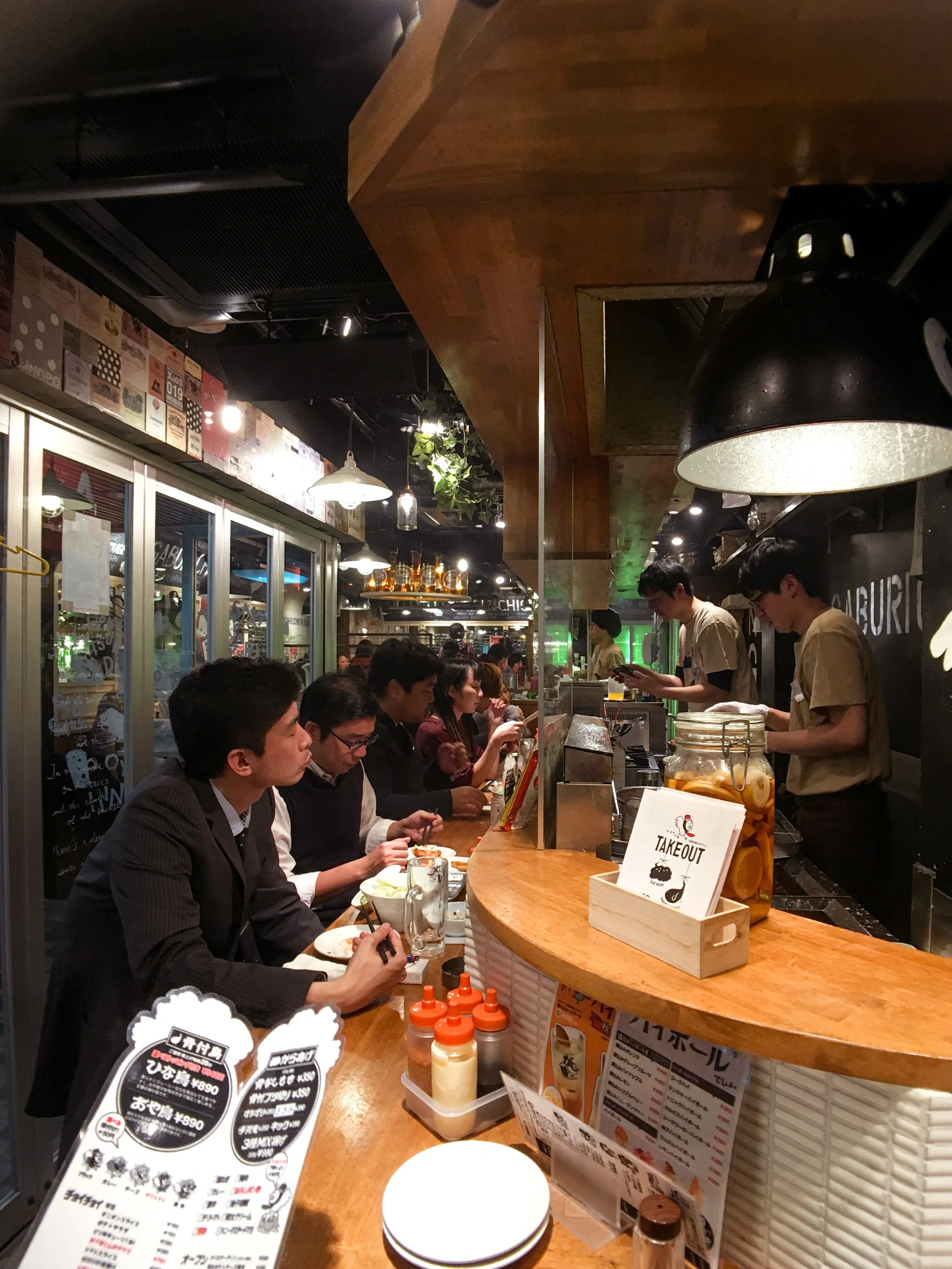
The final night before leaving, we wanted to celebrate the start of our adventure with a hearty meal and to carbo load for the journey. After doing a bit of quick research and speaking to a few locals, we went searching for a neighborhoud Izakaya restaurant that actually wasn't too far away from the bike shop. Itaru Honten Izakaya was the place, and it did not disappoint! Maya ambitiously ordered the "Samurai set meal" which pretty much translated to A LOT OF FOOD, so we ended up having to help her finish. Great selection of dishes and a wonderful Izakaya experience not to be missed! And make sure to bring enough cash, because that's just how they roll (yes, even now ten years later).
Read the next part: Cycling Noto, Japan - Part 2
For full sized bike travel, read also:
Cycling Spain’s Andalucia 2017
Cycling Taiwan’s East Rift Valley, Jiufen and Houtong 2019